National Indigenous
Art Fair 2027
Festival info
The National Indigenous Art Fair will return to Gadigal Land at The Cutaway, Barangaroo in 2027 in its eighth annual event, showcasing creations from First Nations artists, designers and makers.
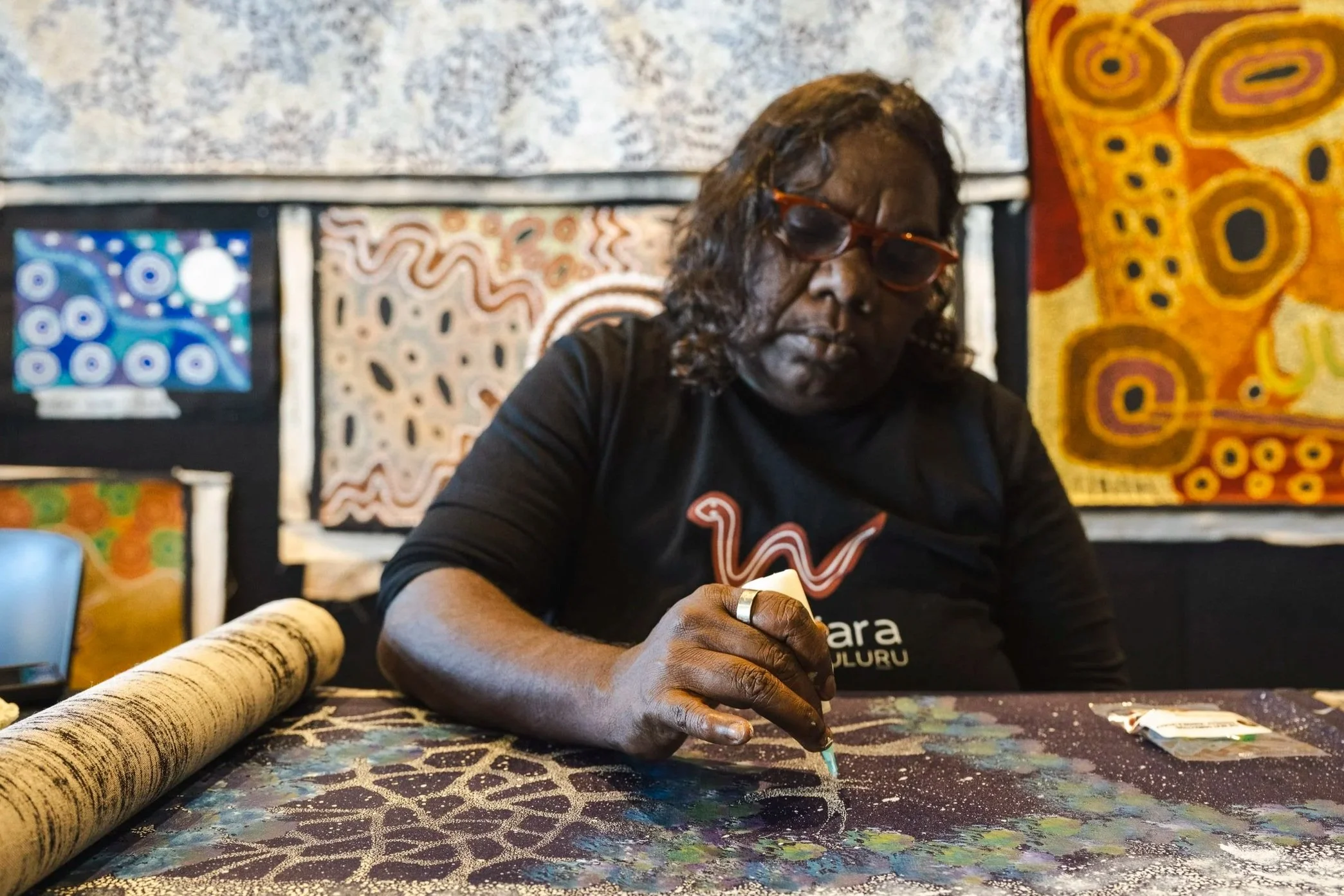
The Fair brings together more than 30 Indigenous Art Centres from across Australia. More than 100 Aboriginal and Torres Strait Islander artists will travel to Sydney to share their stories, cultures and artistic practices directly with audiences.
At the ethical marketplace, there’ll be more than 50 stallholders where visitors can purchase art, handmade jewellery, homewares, food and more, with all proceeds going directly back to the artists and First Nations communities.
Visitors can also enjoy cooking demonstrations, participate in workshops and experience a vibrant program of live music and dance performances.
Event details
Date:
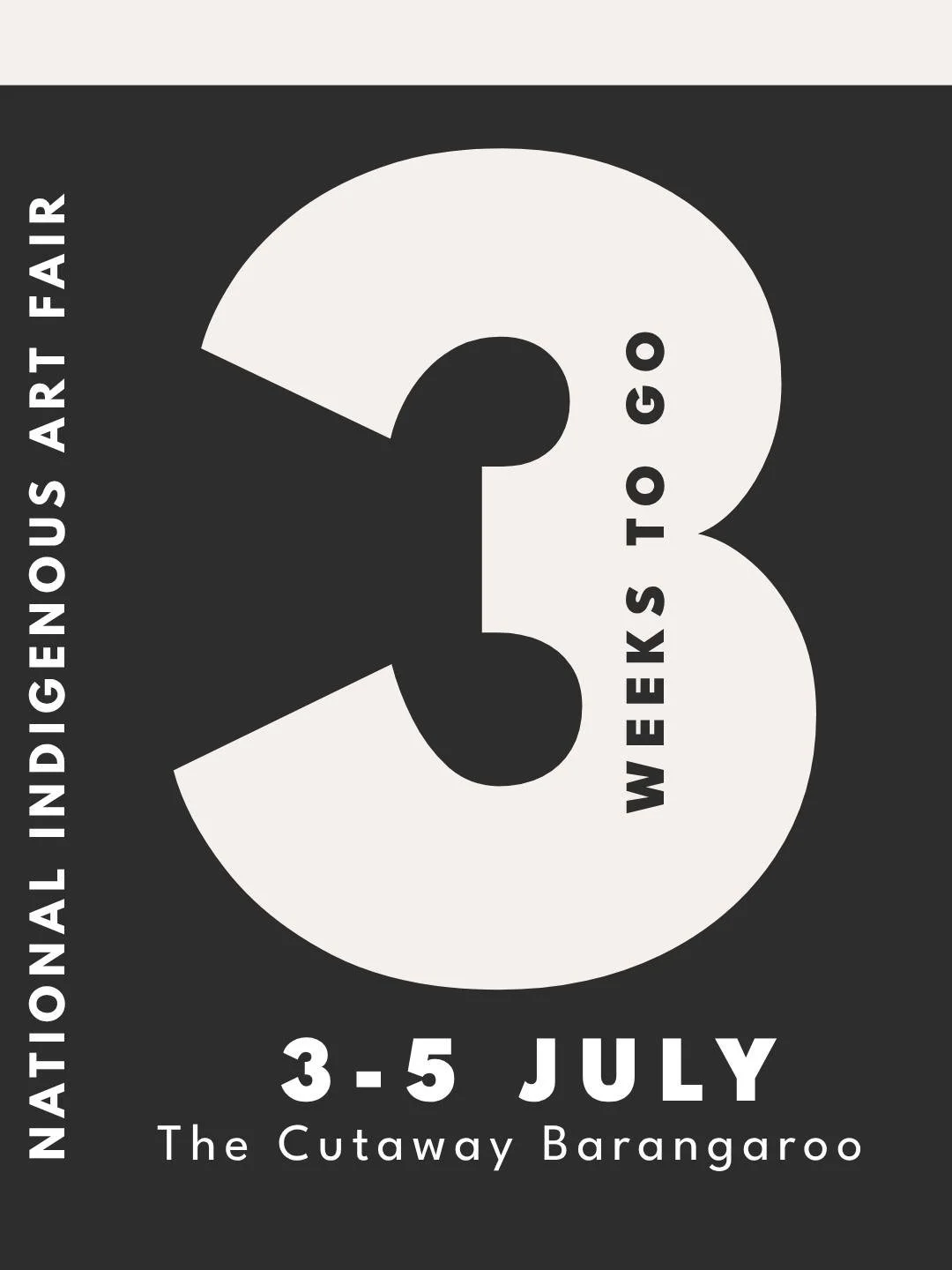
2-4 July, 2027
Time
Friday 2 July | 5:30pm–8:30pm | Opening Night
Saturday 3 July | 10am–5pm | Art Fair
Sunday 4 July | 10am–4pm | Art Fair
Location
The Cutaway, Barangaroo
Entry:
(12 years and under free) All funds support remote Indigenous artists from the Art Fair.

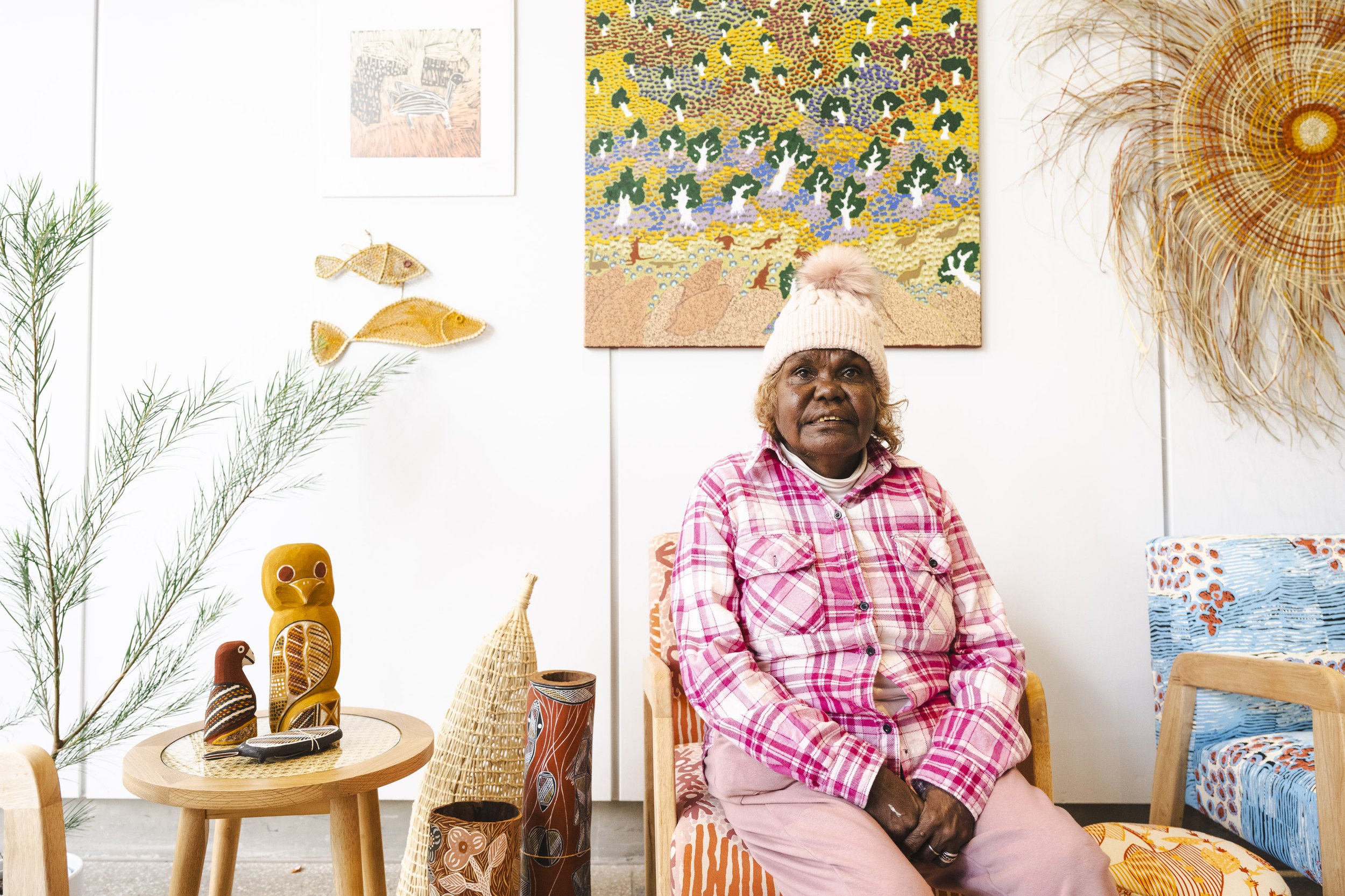
Roselie Peterson, Barkly Regional Arts
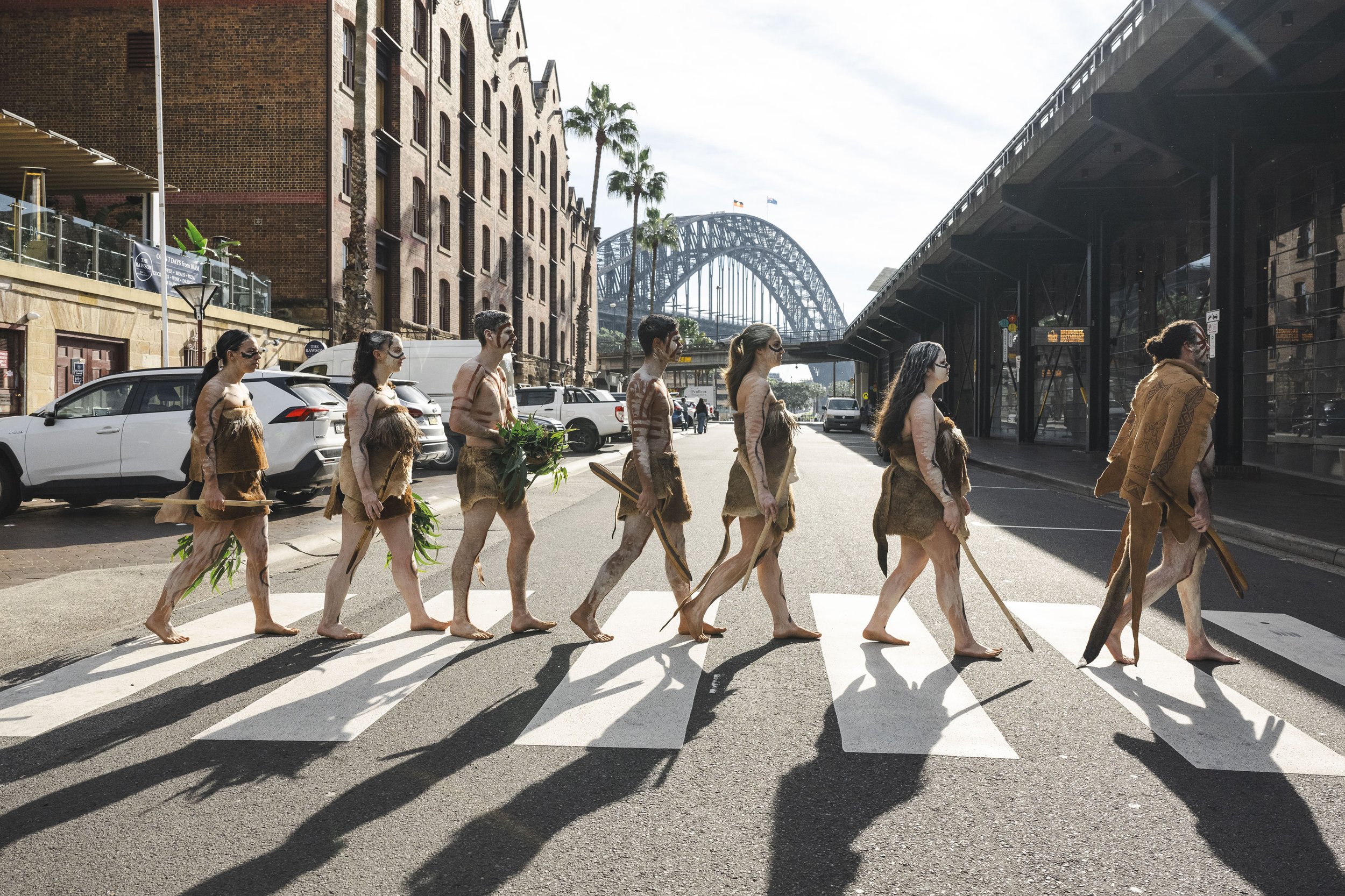
Gawura Cultural Immersions and Wagana Dancers
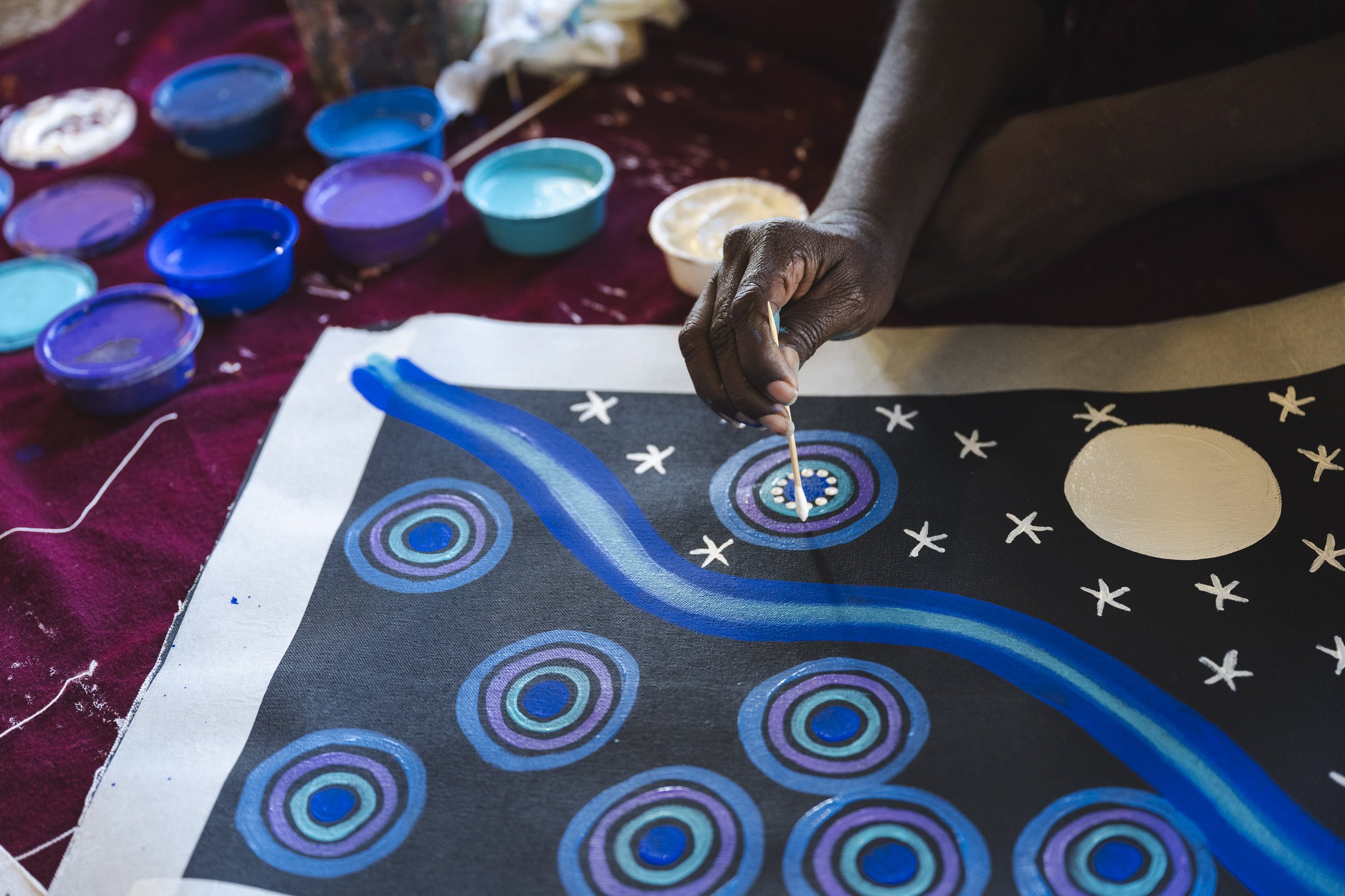
A person creating a starry night or space-themed artwork using paints on a black canvas, with small star shapes and circular patterns, surrounded by various buckets of paint in shades of blue, purple, and white.
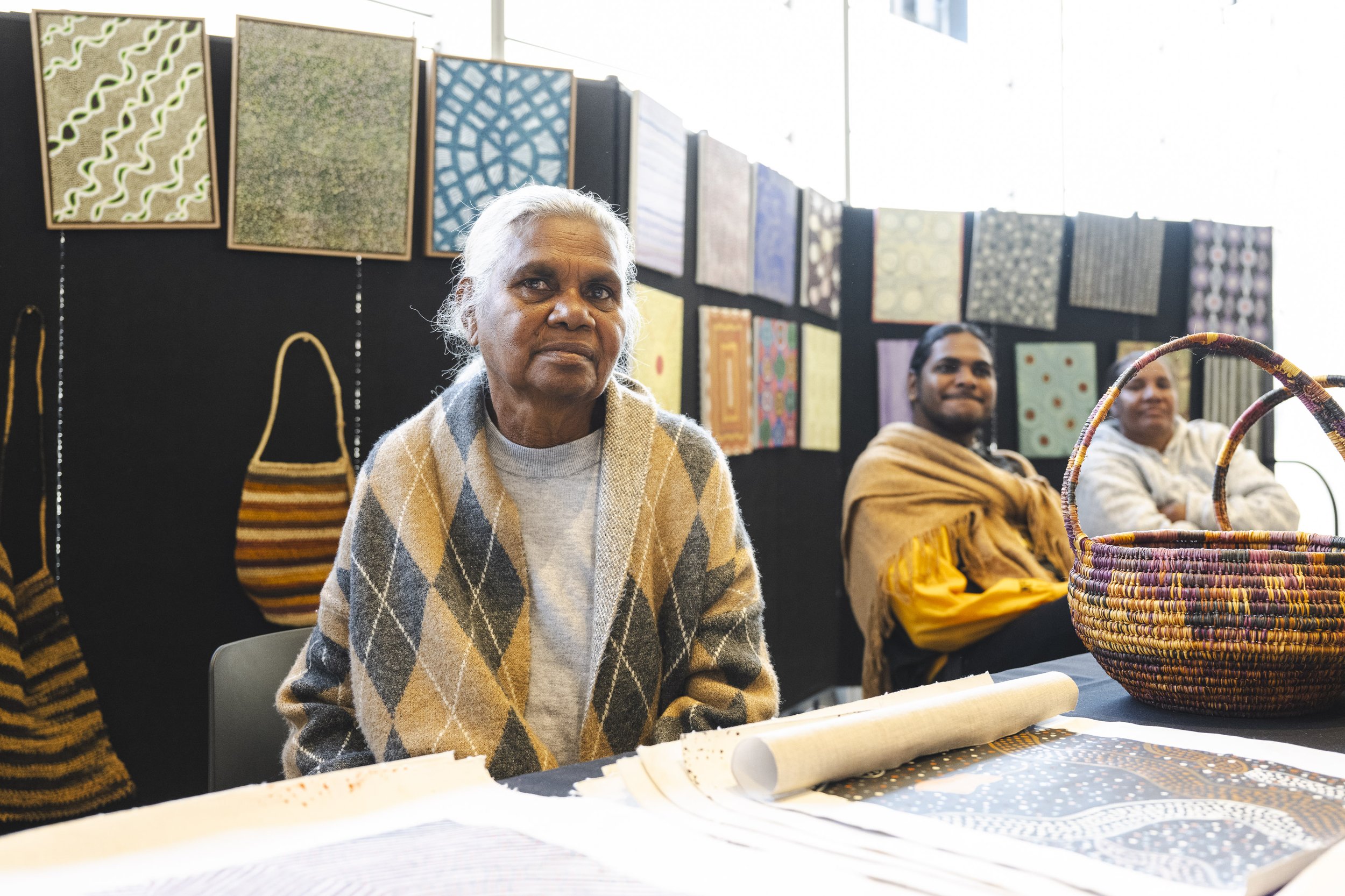
Regina Wilson, Duurmu Arts
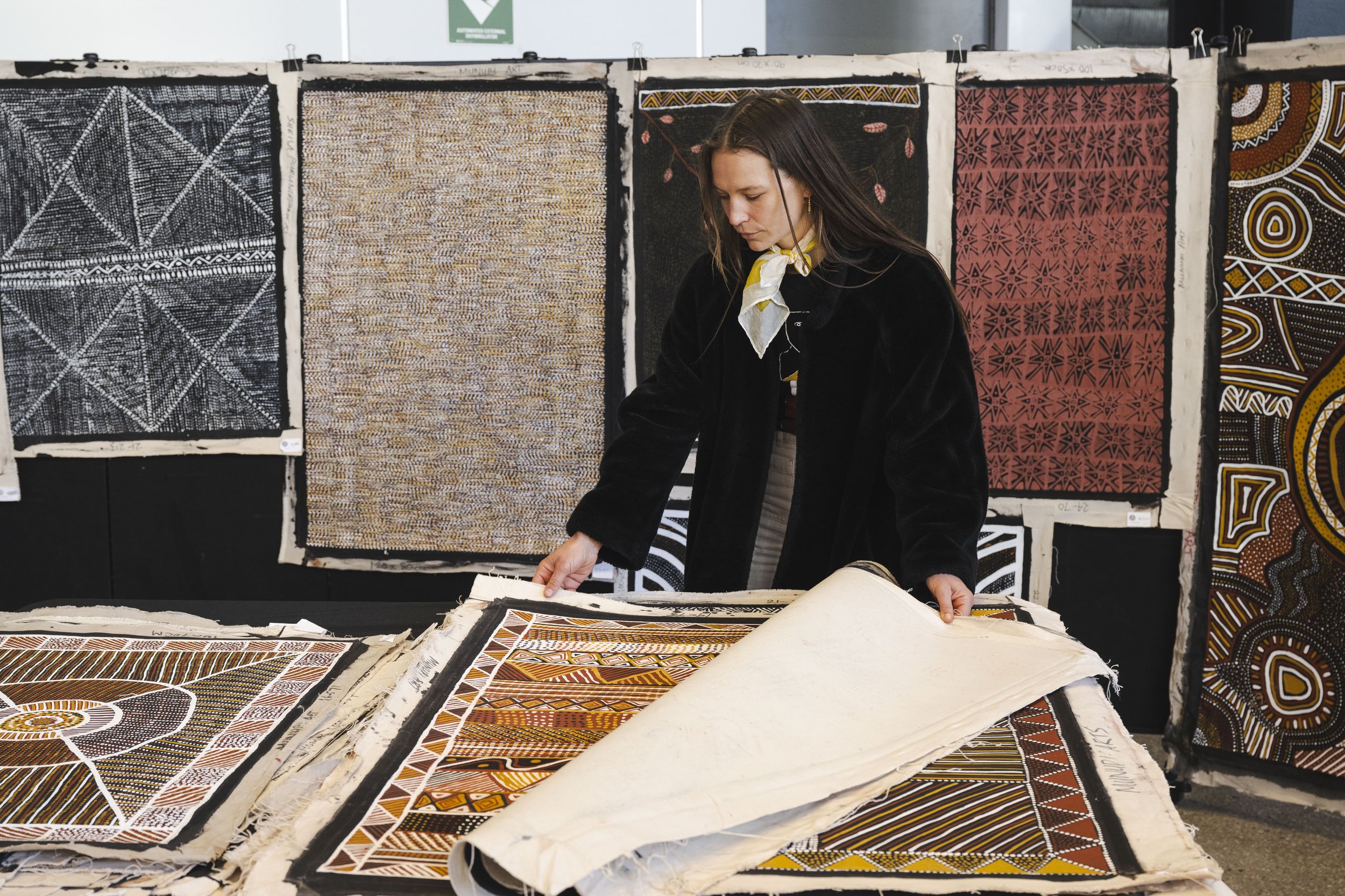
Munipi Arts
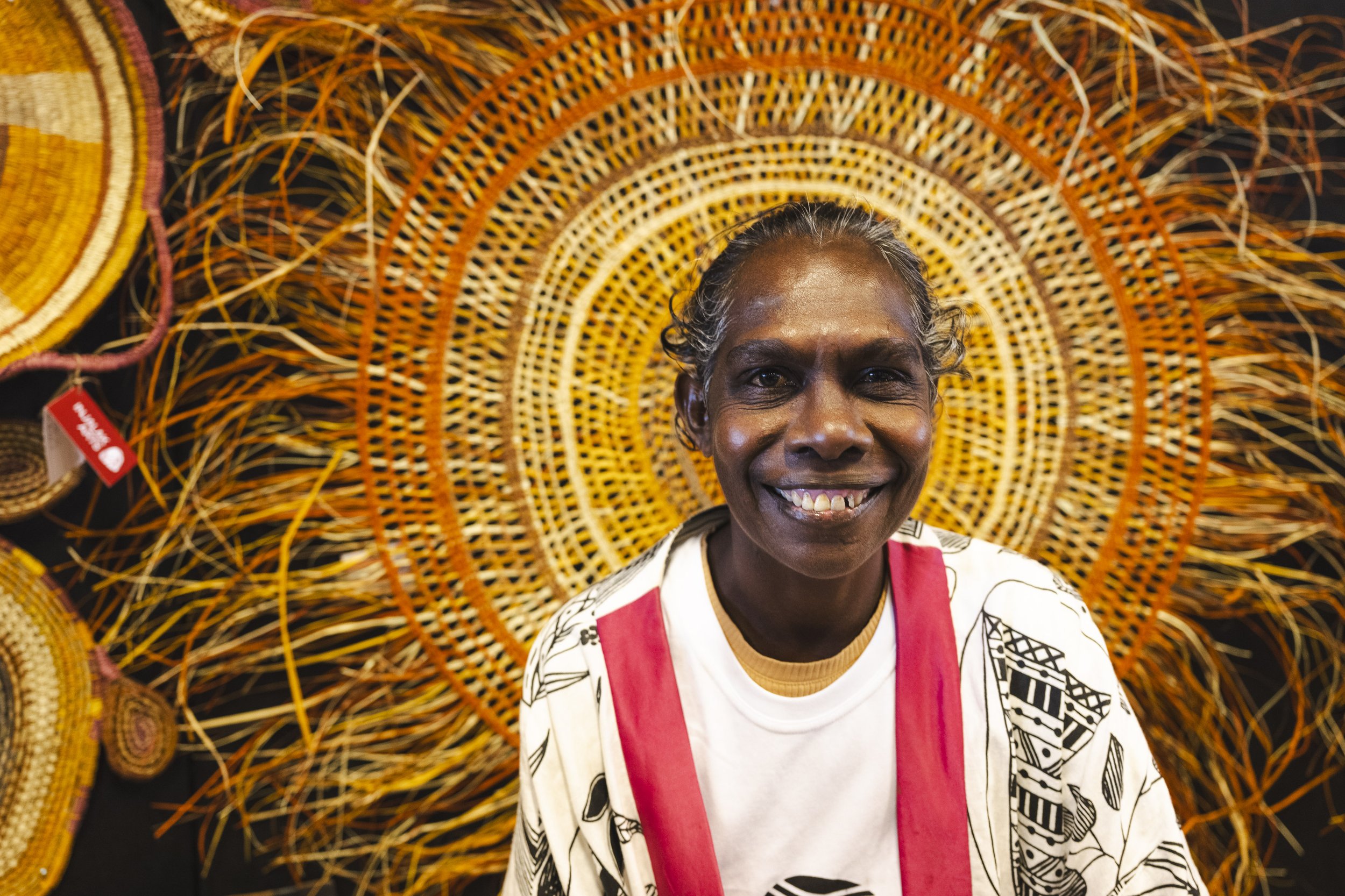
A person with dark hair smiling and winking, wearing a white shirt with black geometric patterns and red suspenders, lying on a colorful woven basket or mat with concentric circular patterns.
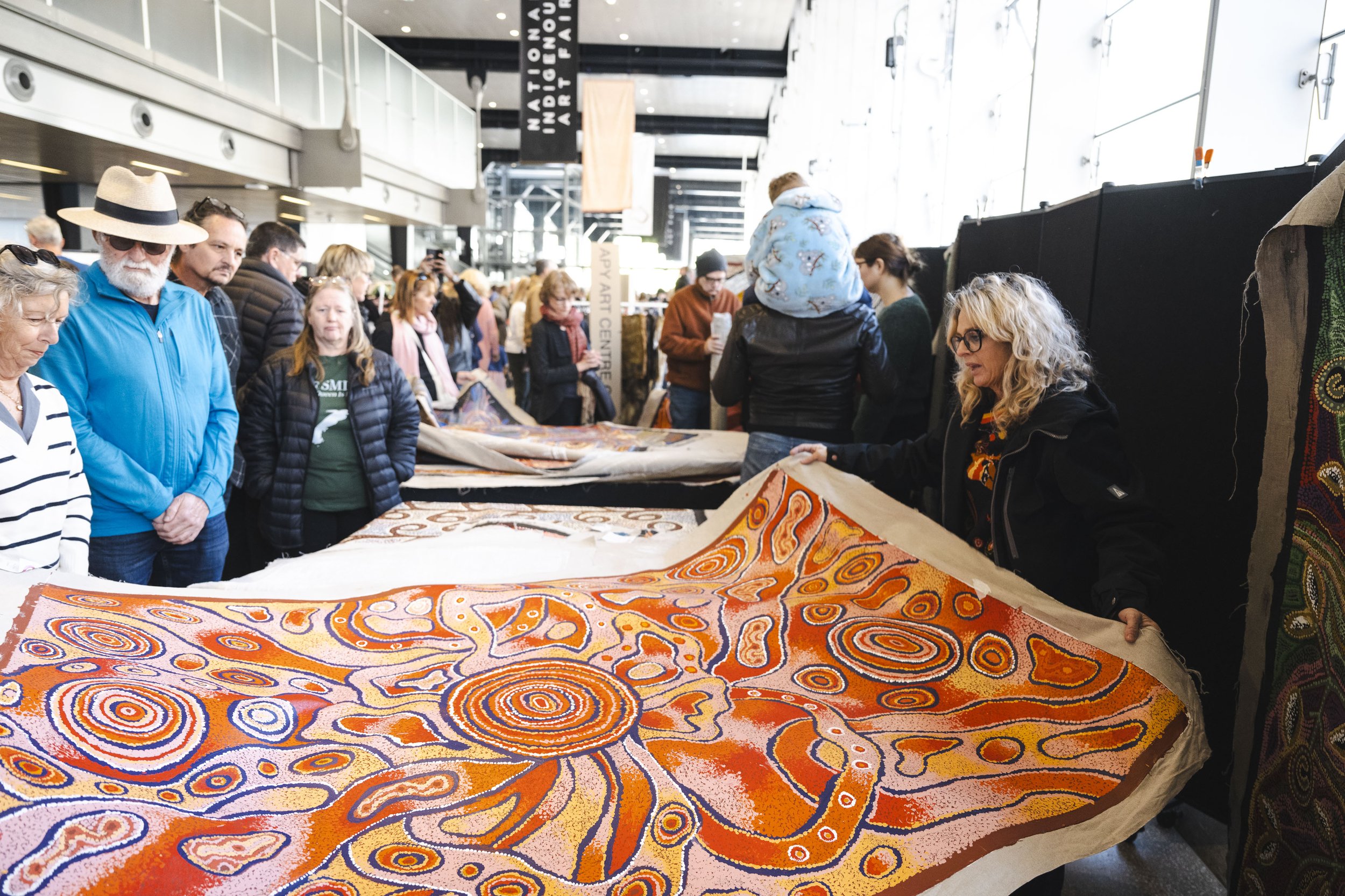
APY Art Centre Collective
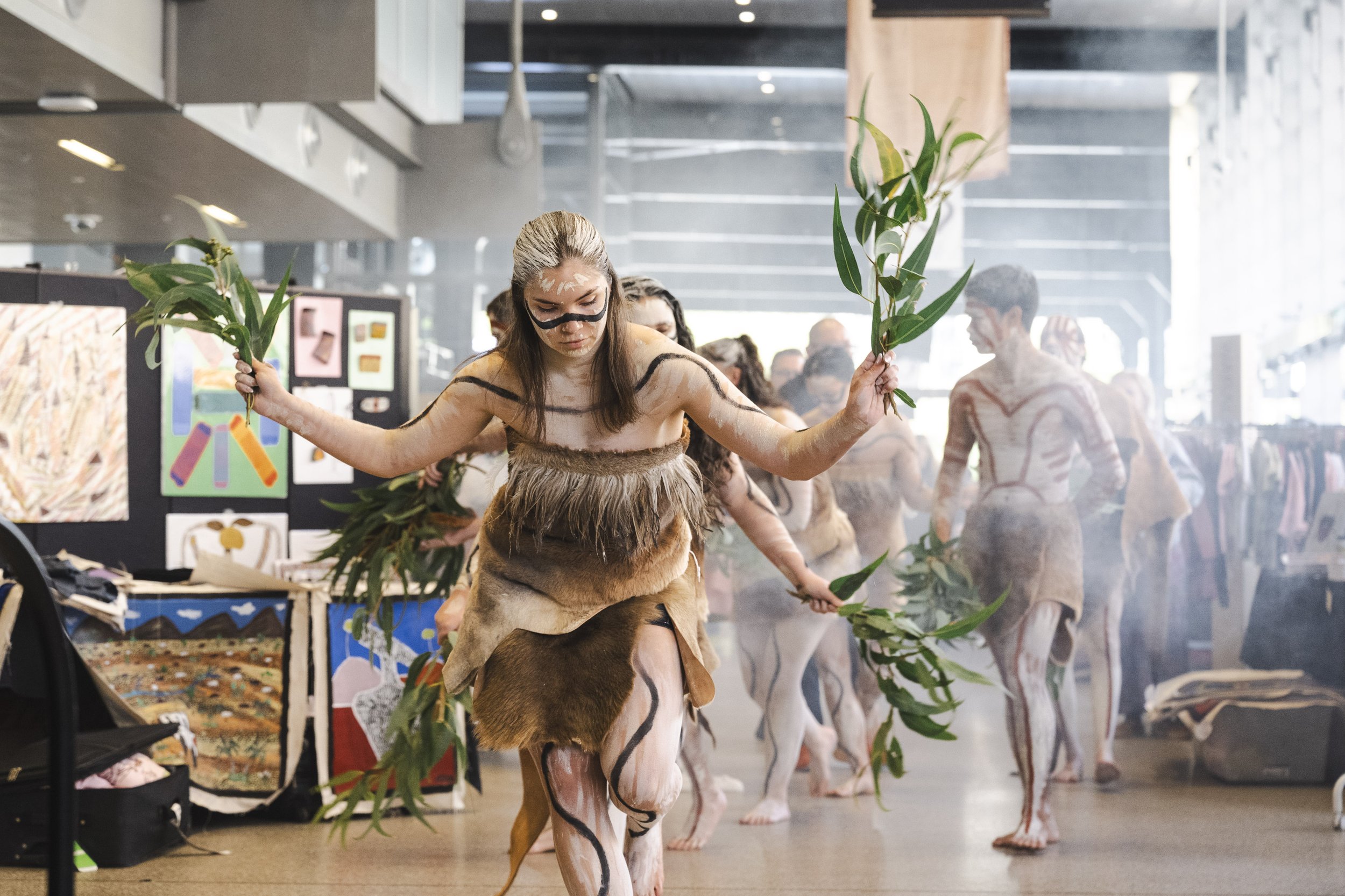
Gawura Cultural Immersions and Wagana Dancers
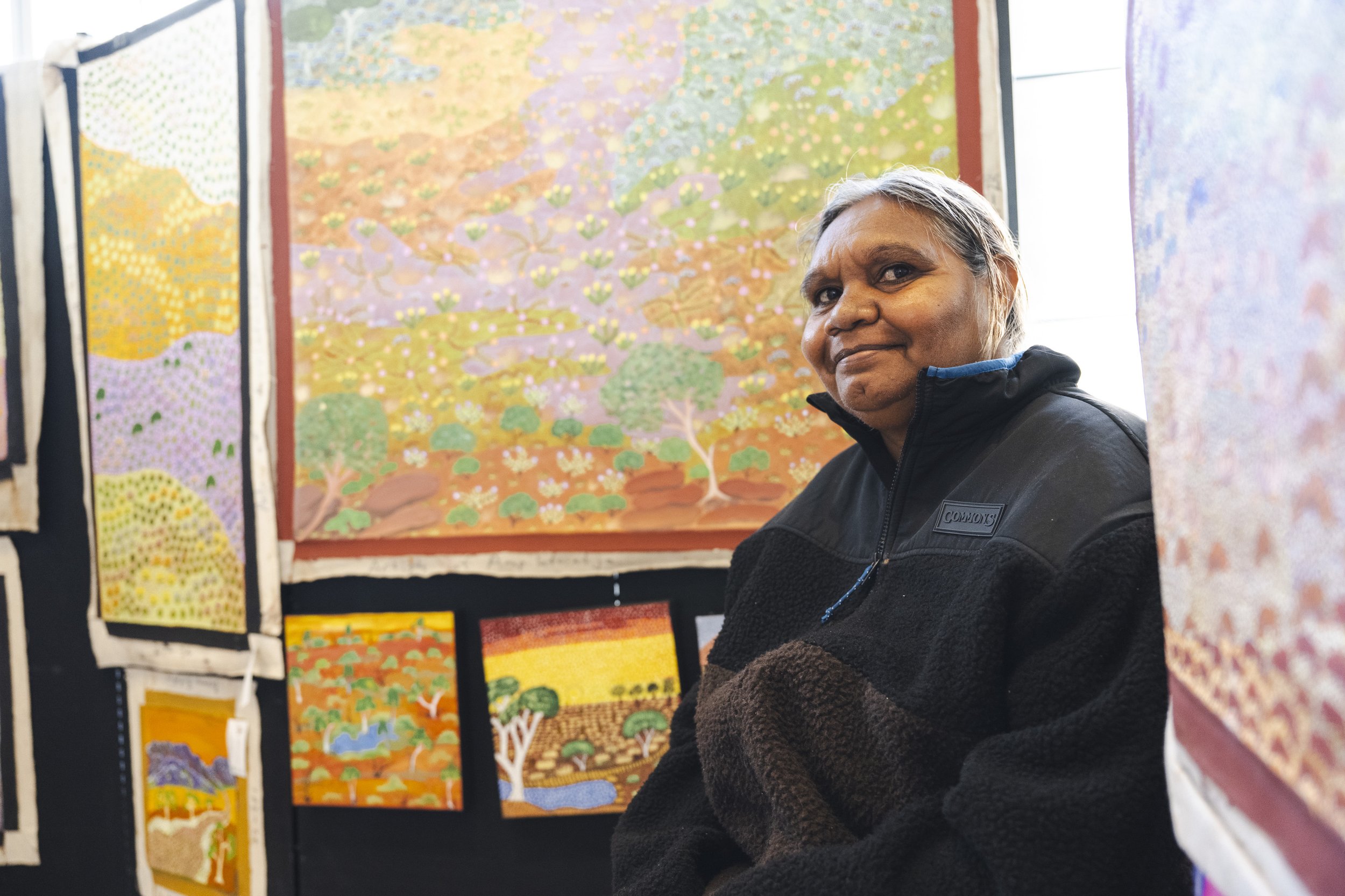
Kathleen Nanima Rambler, Artists of Ampilatwatja
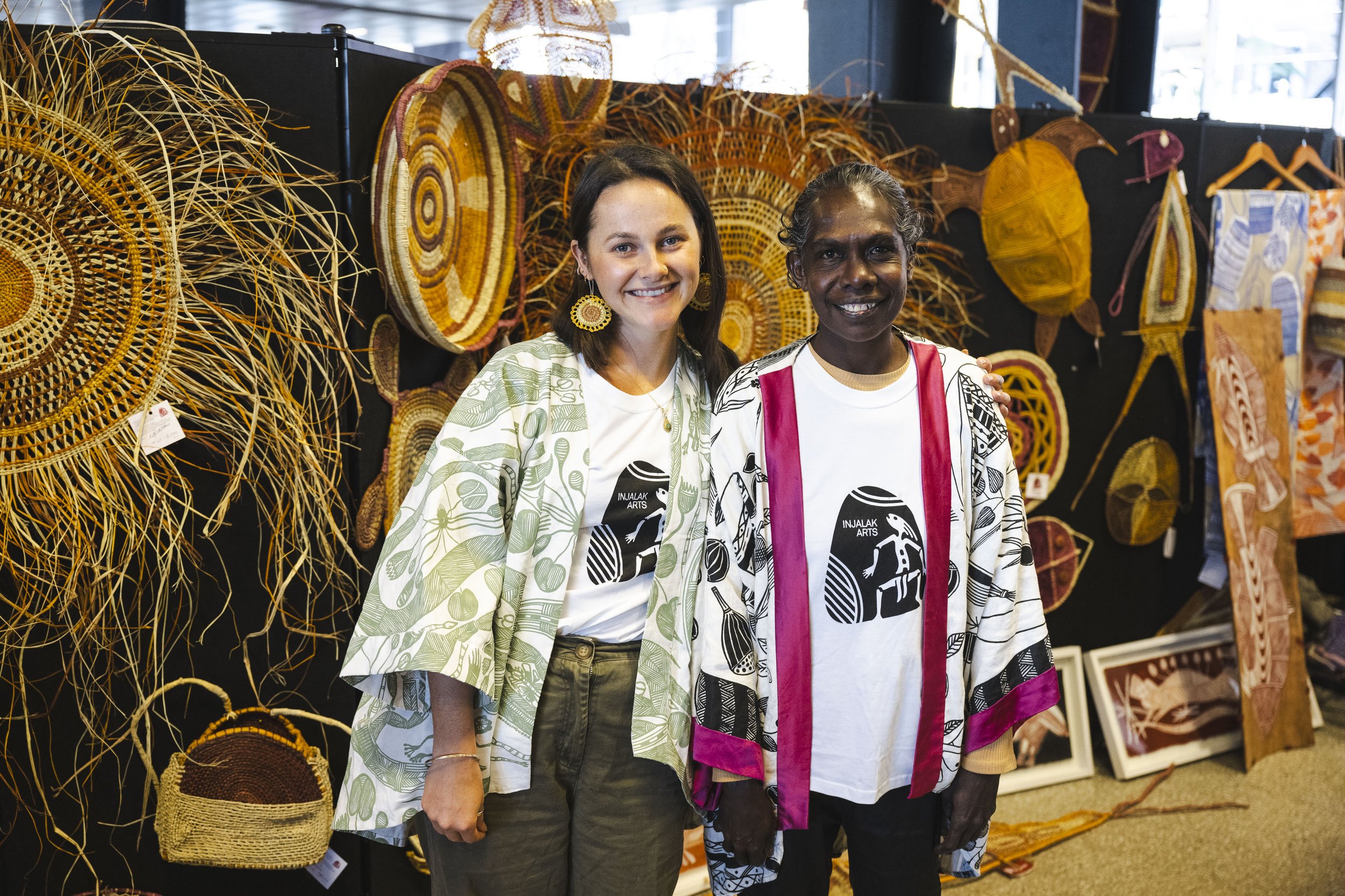
Injalak Arts
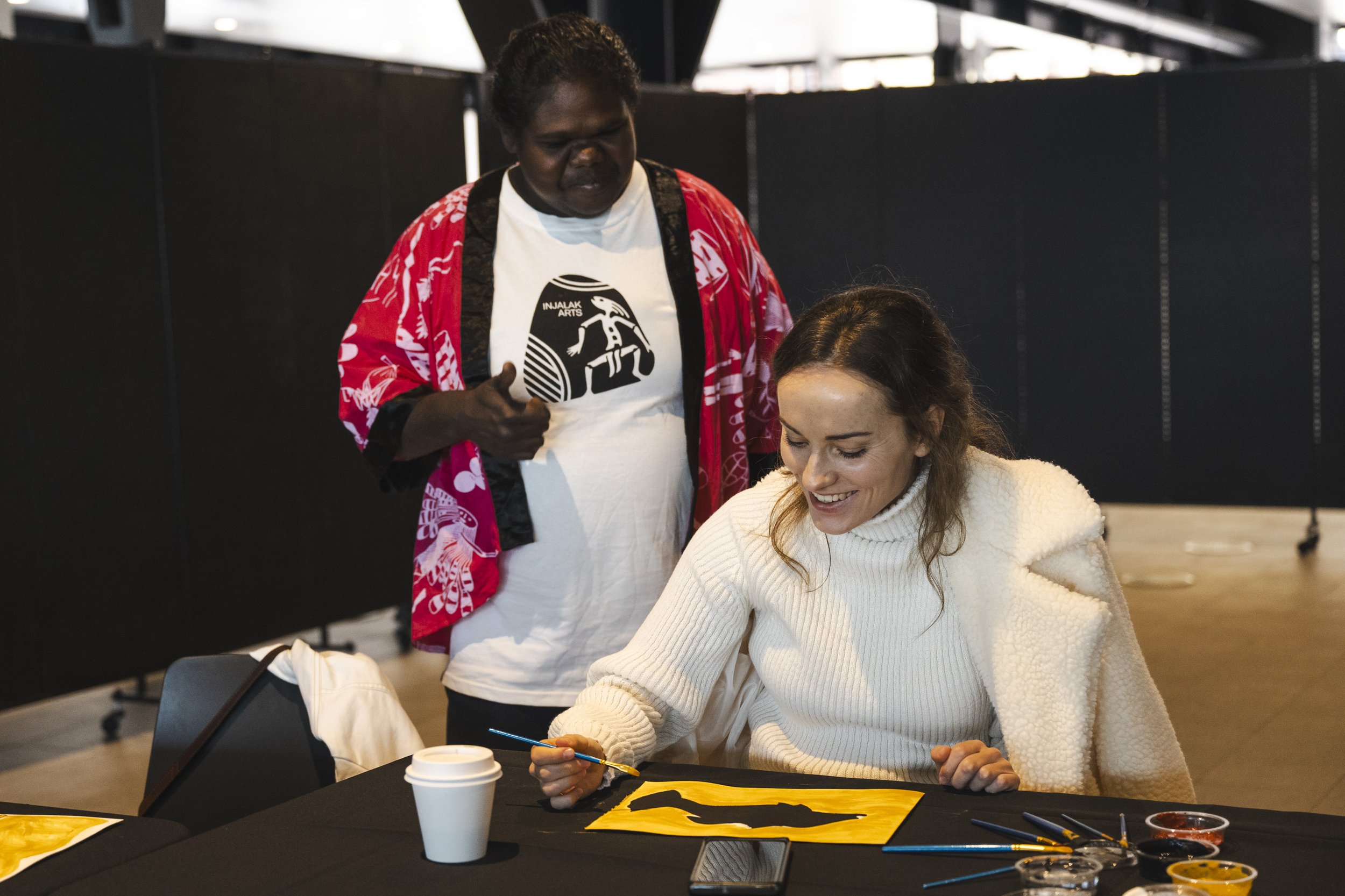
Injalak Arts
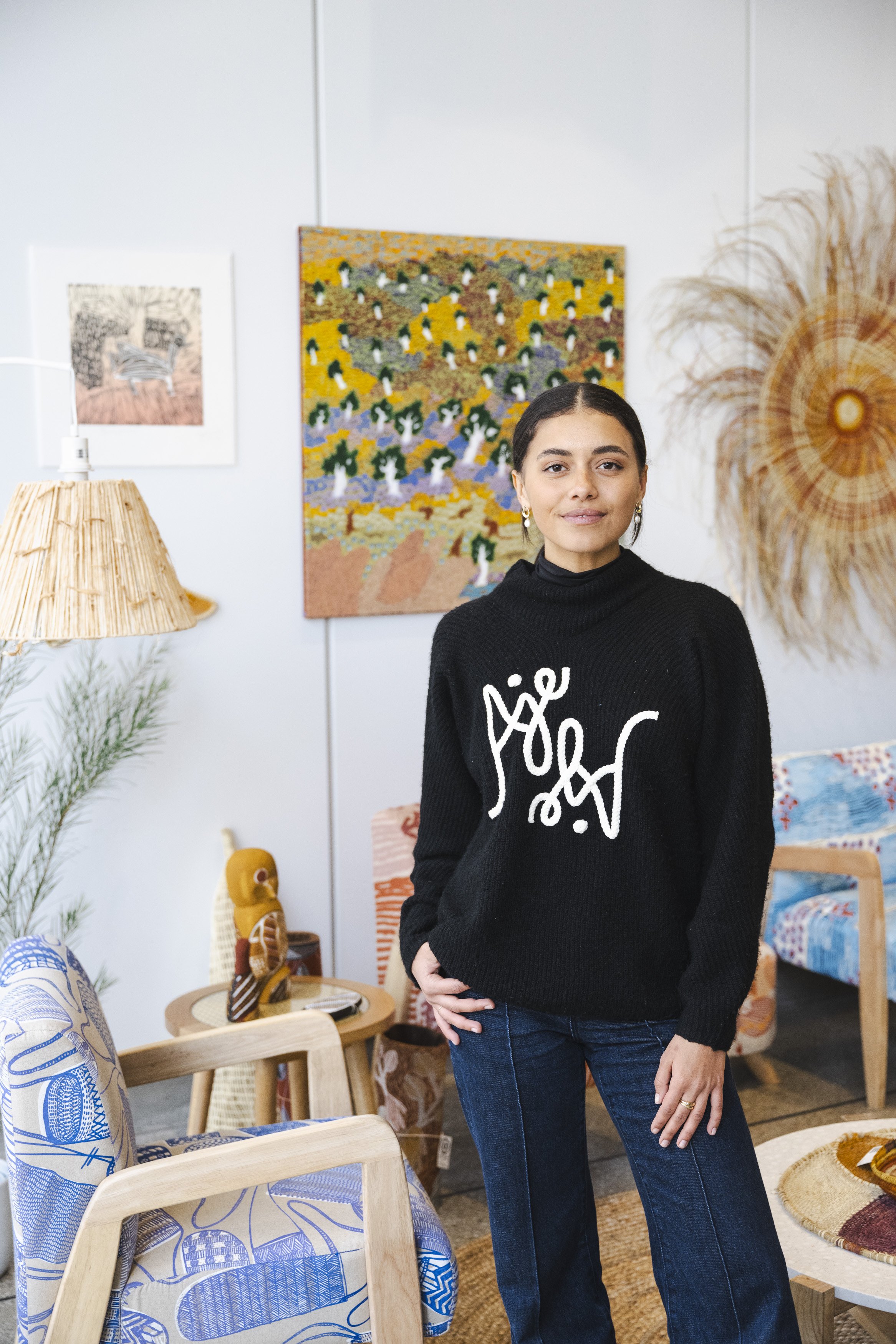
The Living Room, curated by Miah Madden
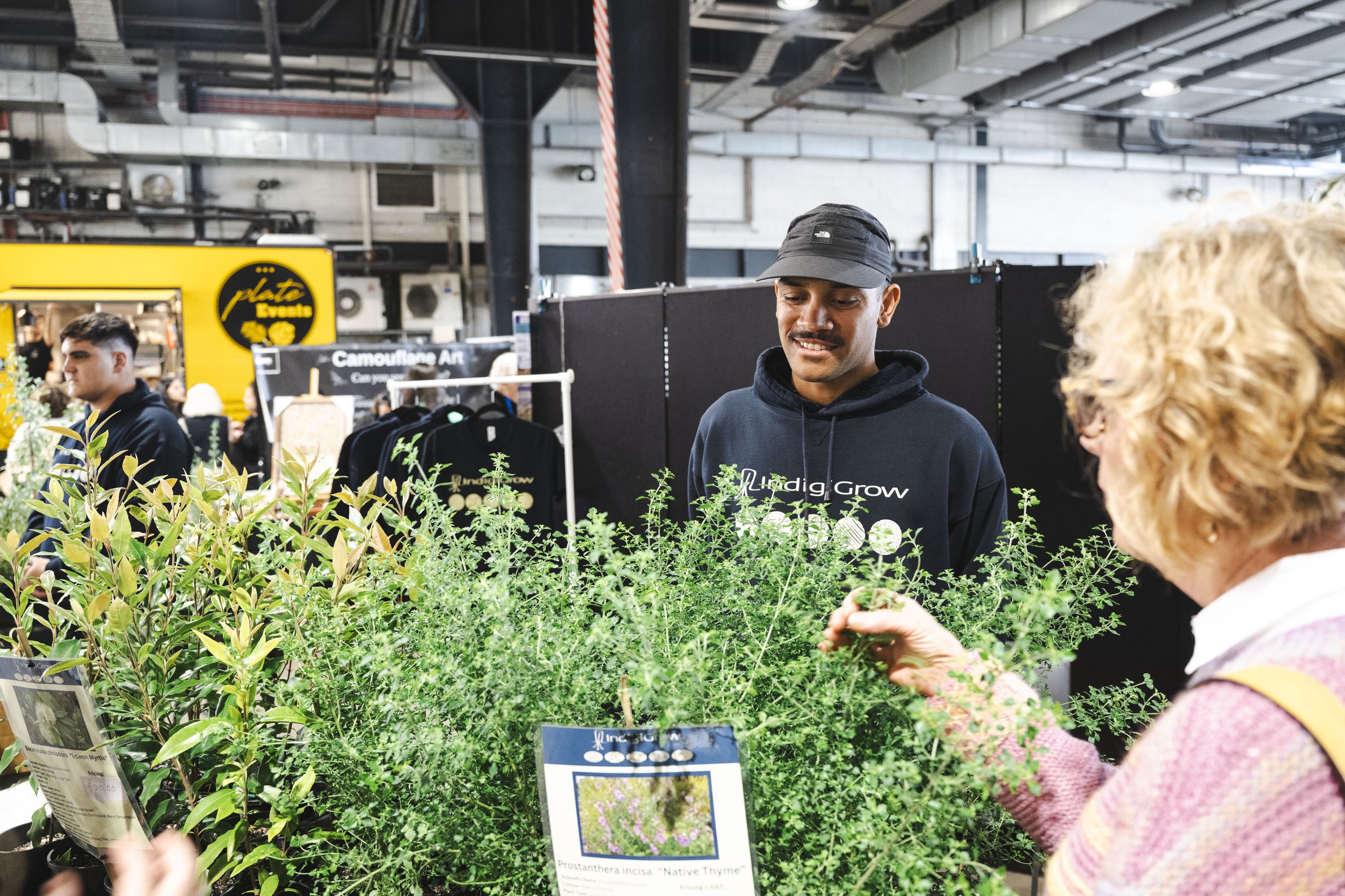
Richard from IndigiGrow at their stall at the Art Fair
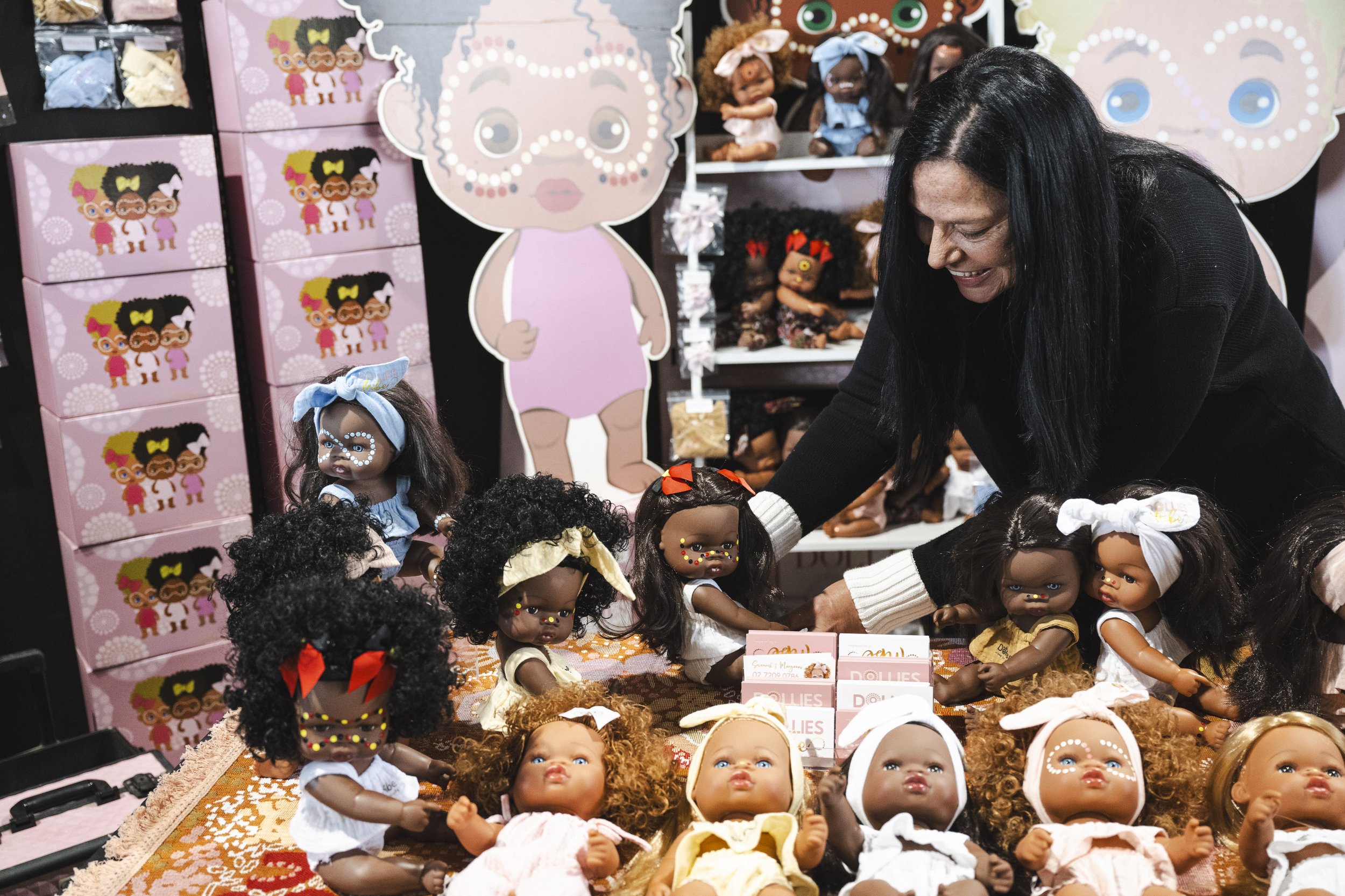
Dollies Tribe
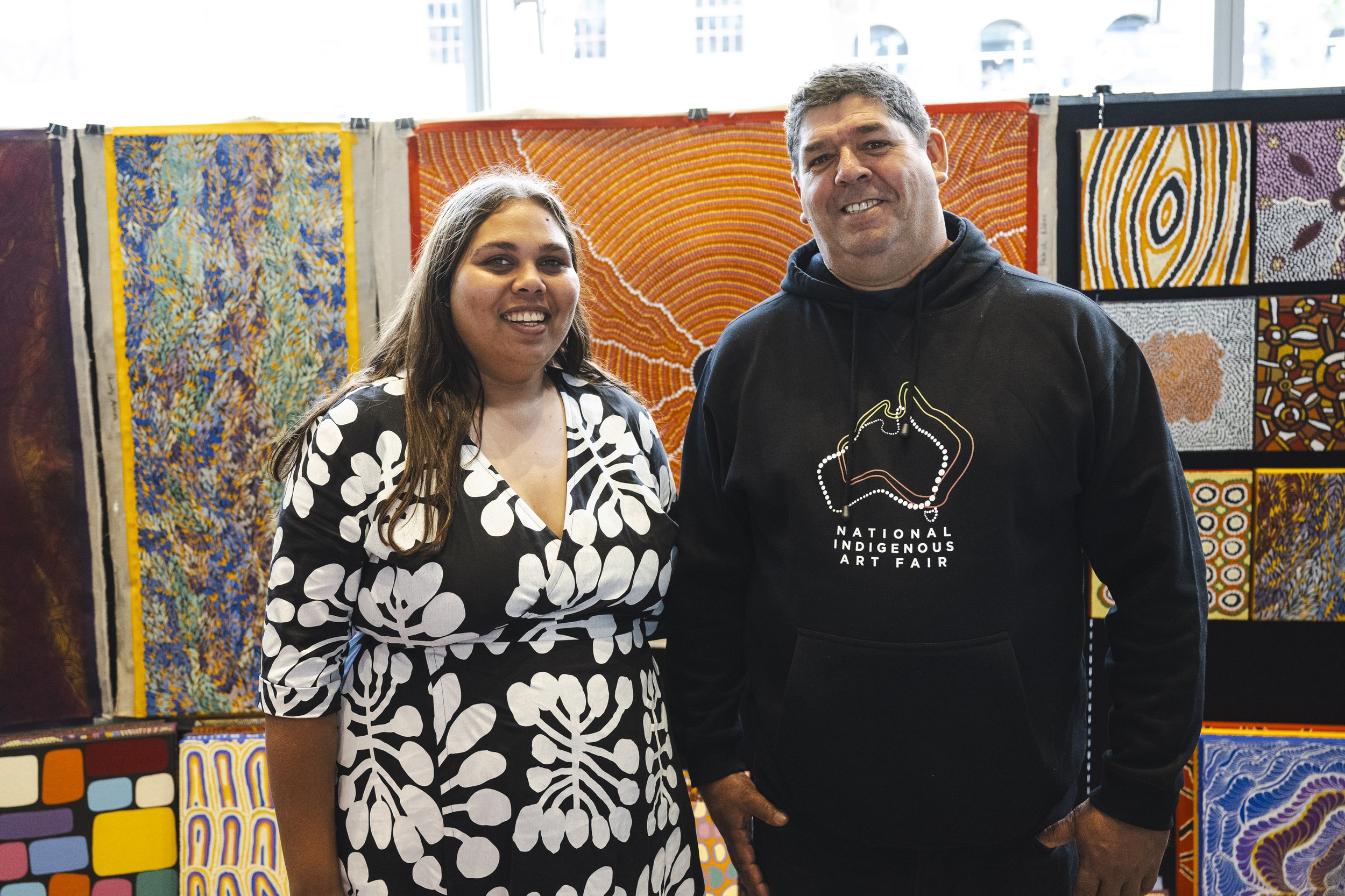
Ikuntju arts worker Hayley Dodd with First Hand Solutions CEO Peter Cooley
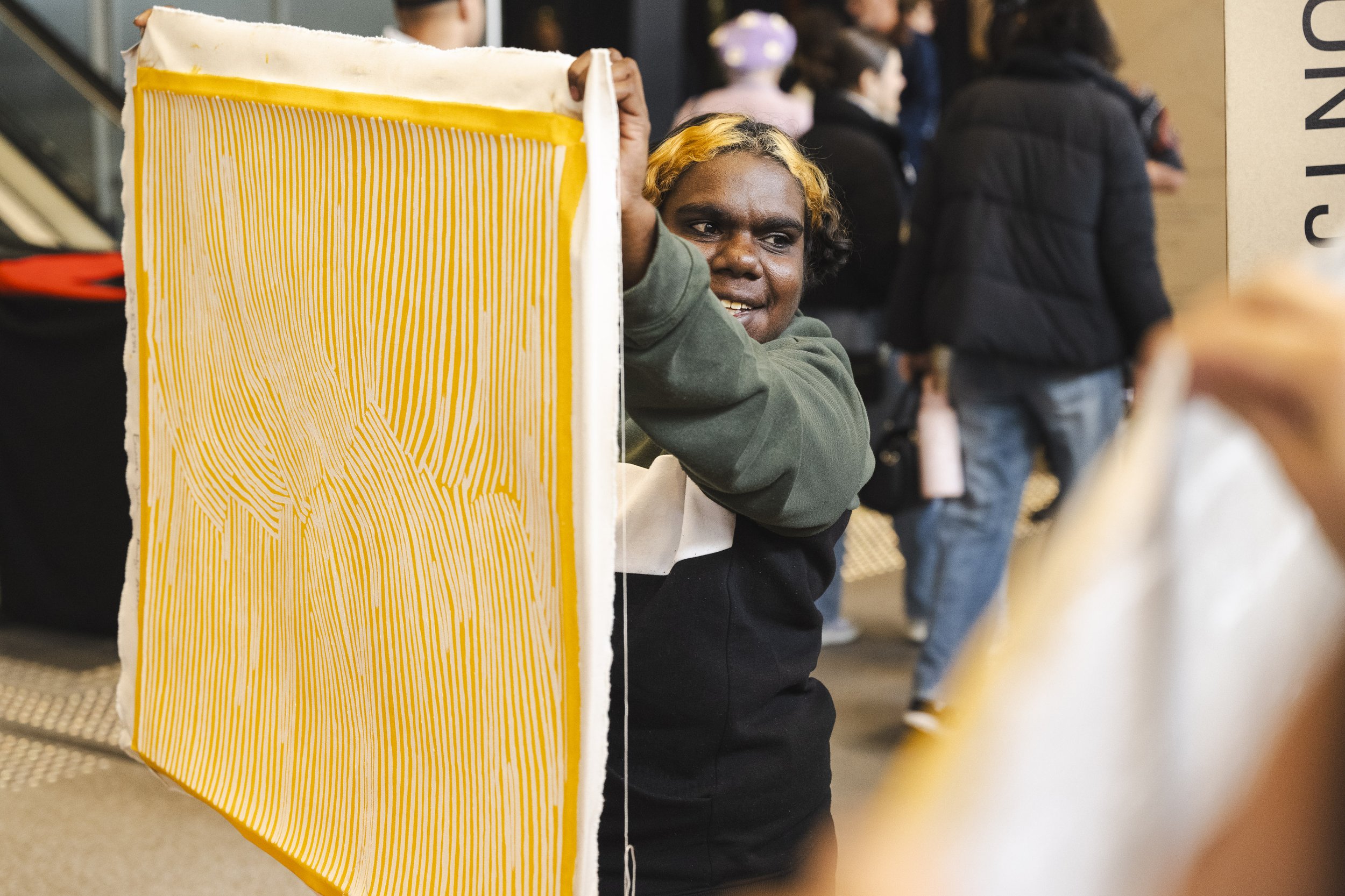
Ikuntju artist Kathy Curtis
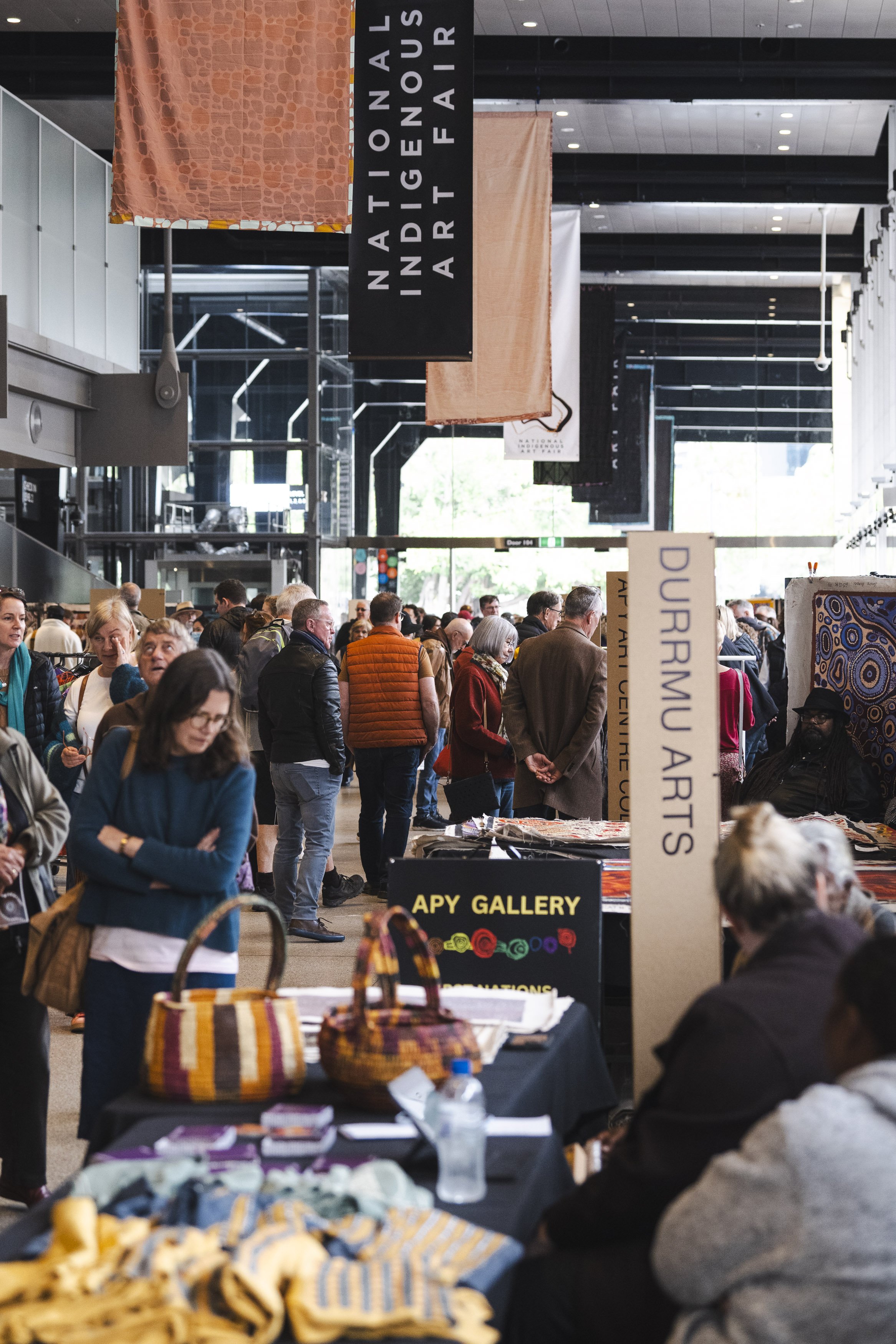
Inside NIAF
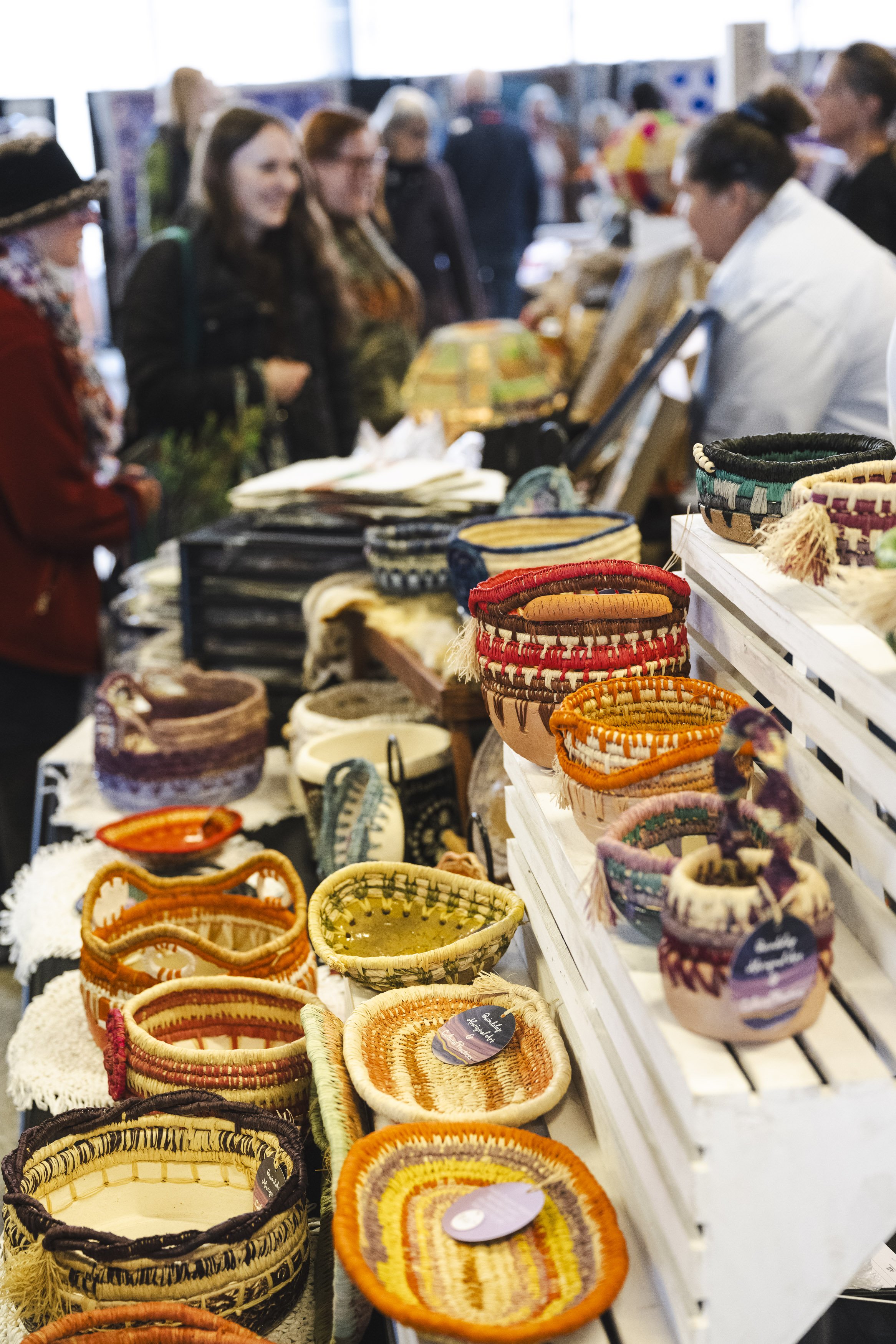
Colorful woven baskets displayed on a white table at a market or craft fair with people shopping and browsing in the background.
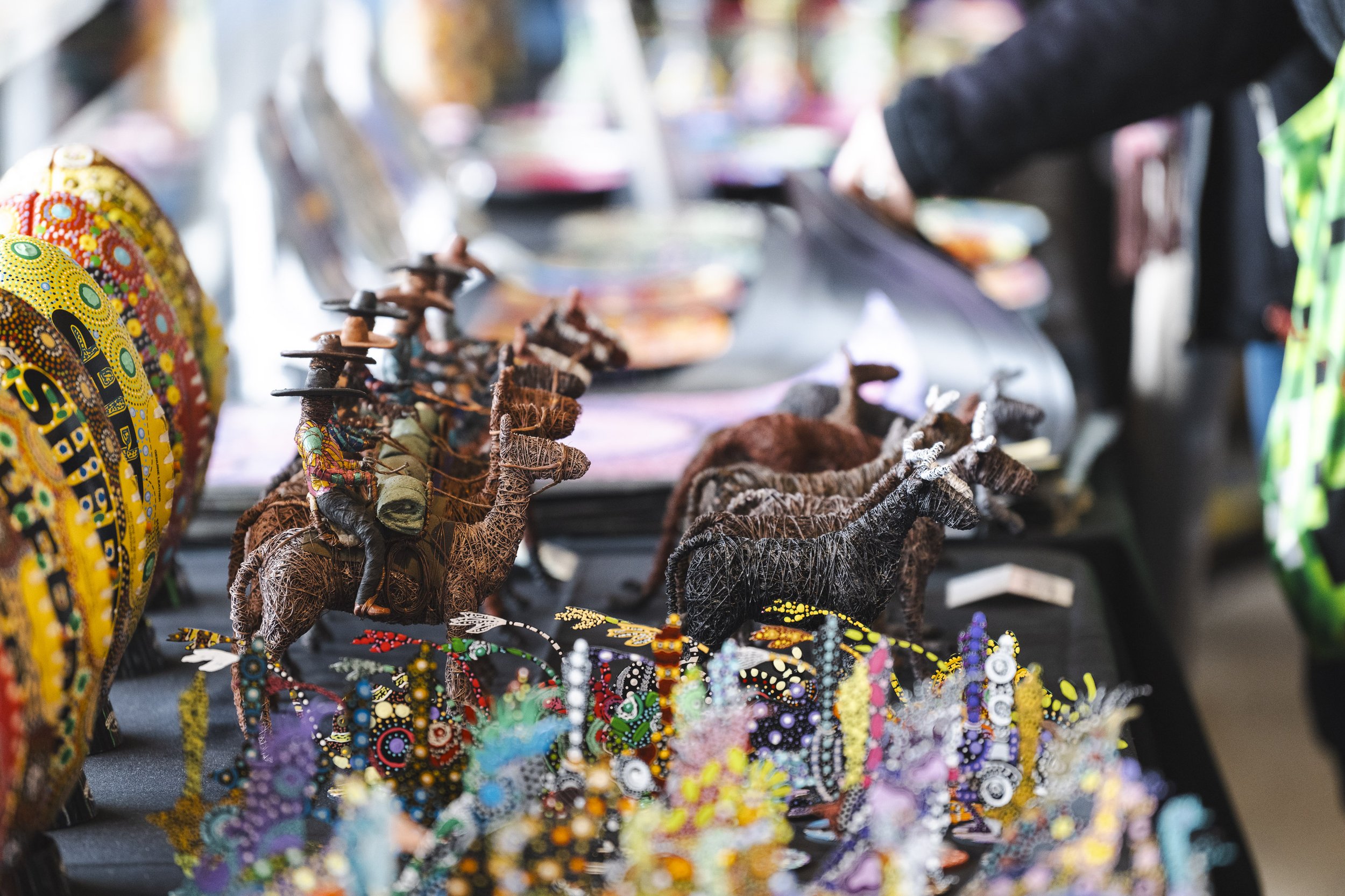
Keringke Arts artwork
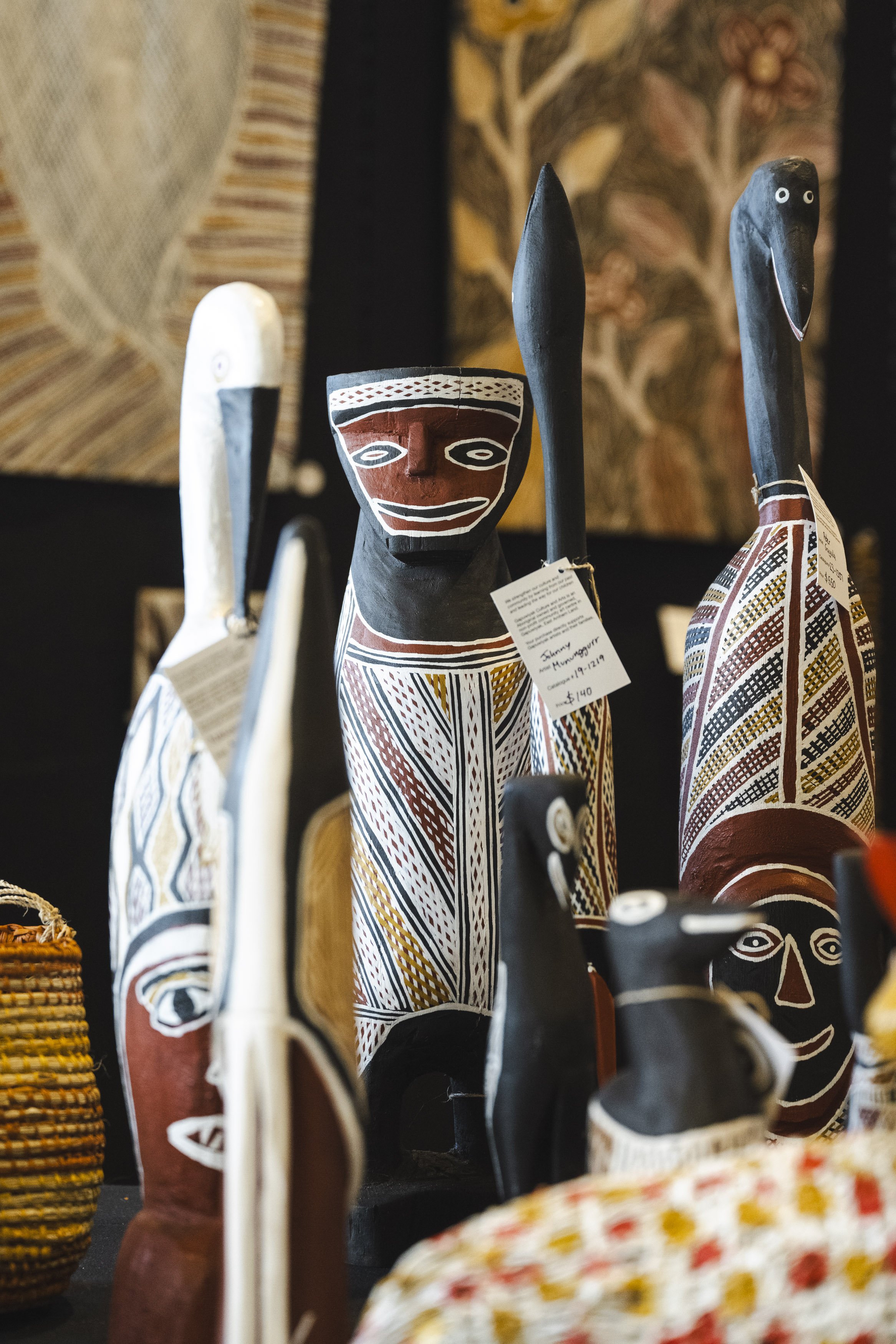
A collection of traditional African wooden carvings with detailed faces and painted patterns, displayed for sale.
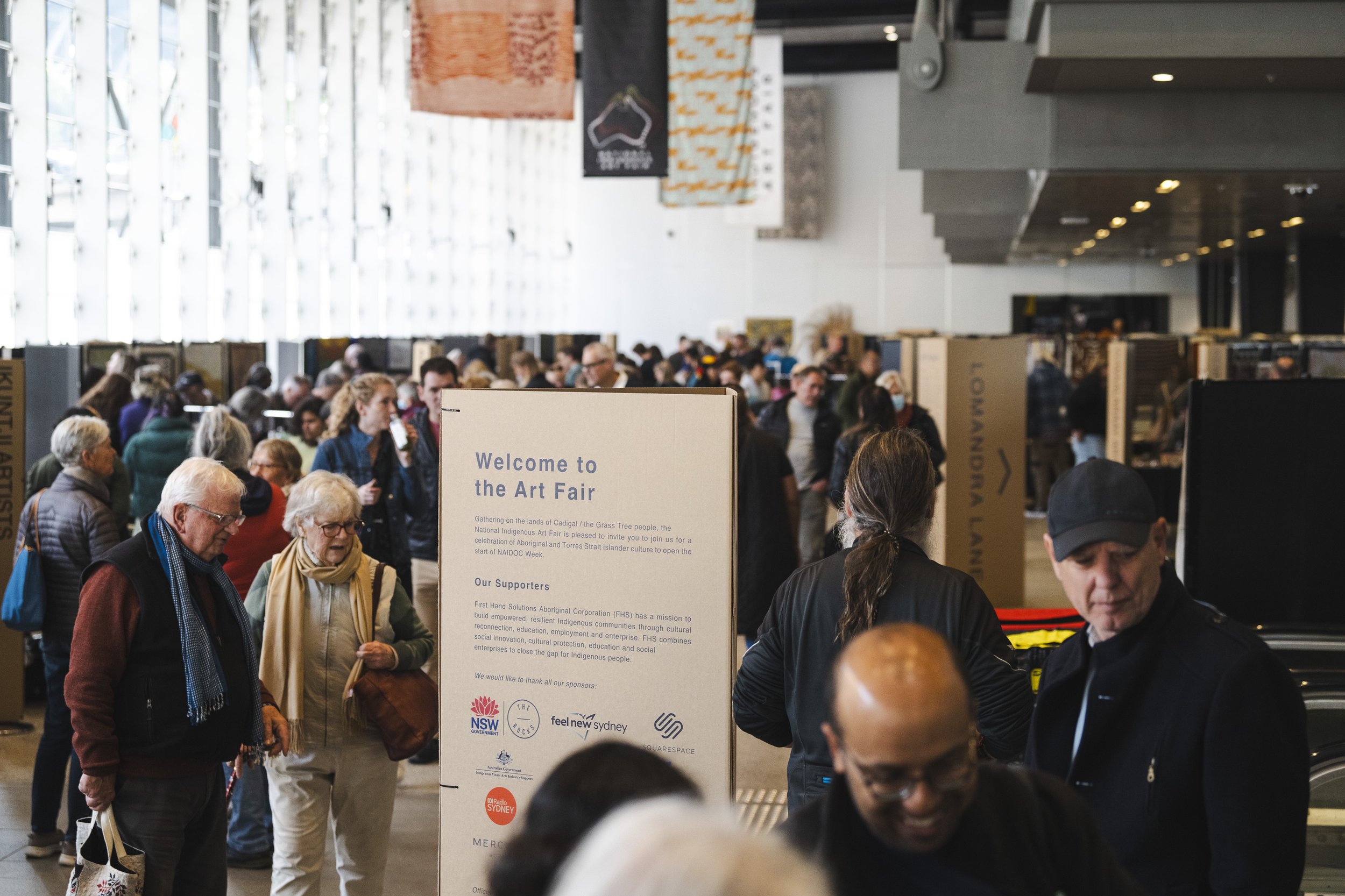
At the entrance to NIAF
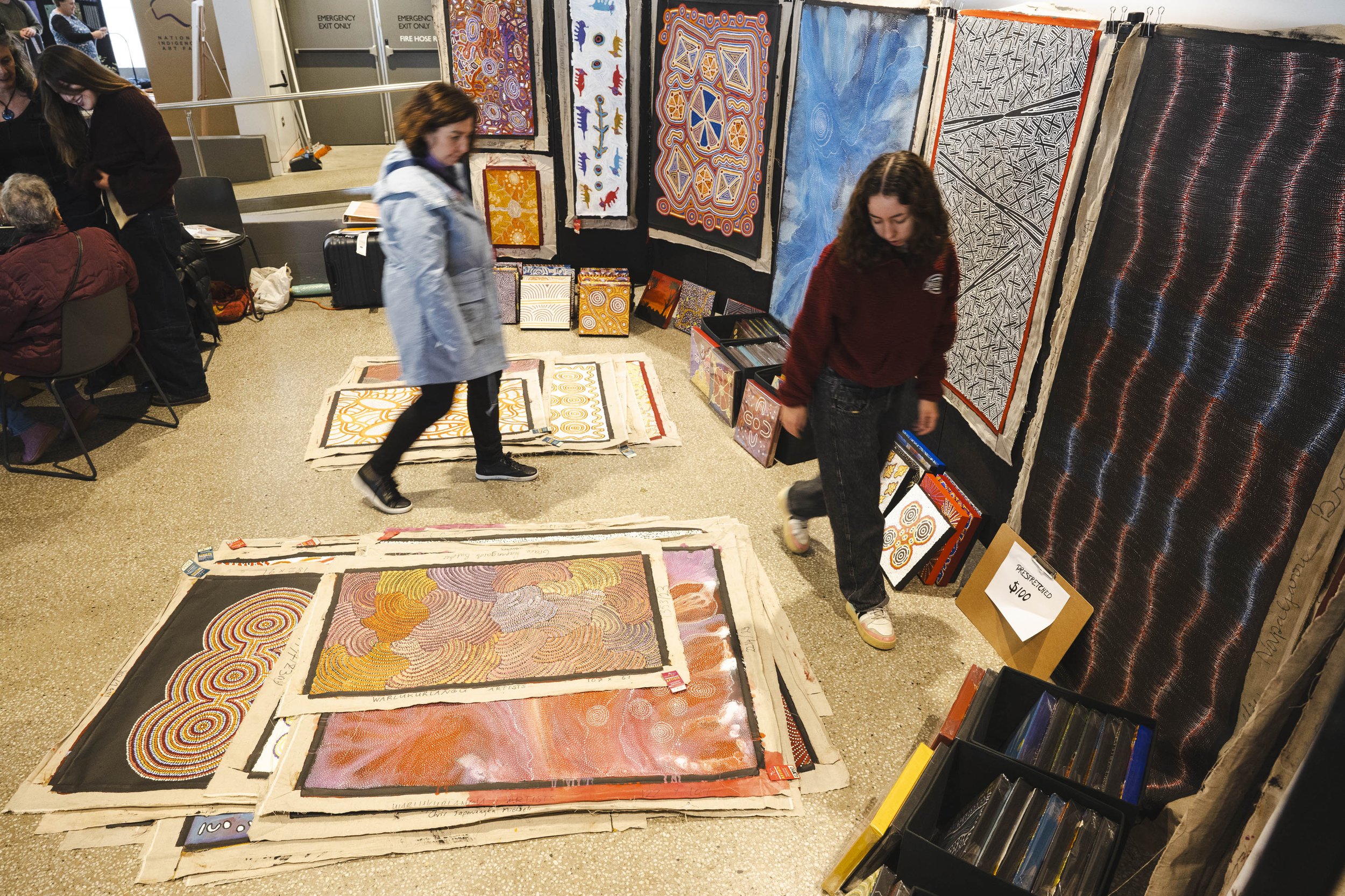
Art exhibition booth displaying various Aboriginal artwork including paintings on fabric and on paper, with two young women browsing and exploring the art, and a sign indicating art priced at $100.
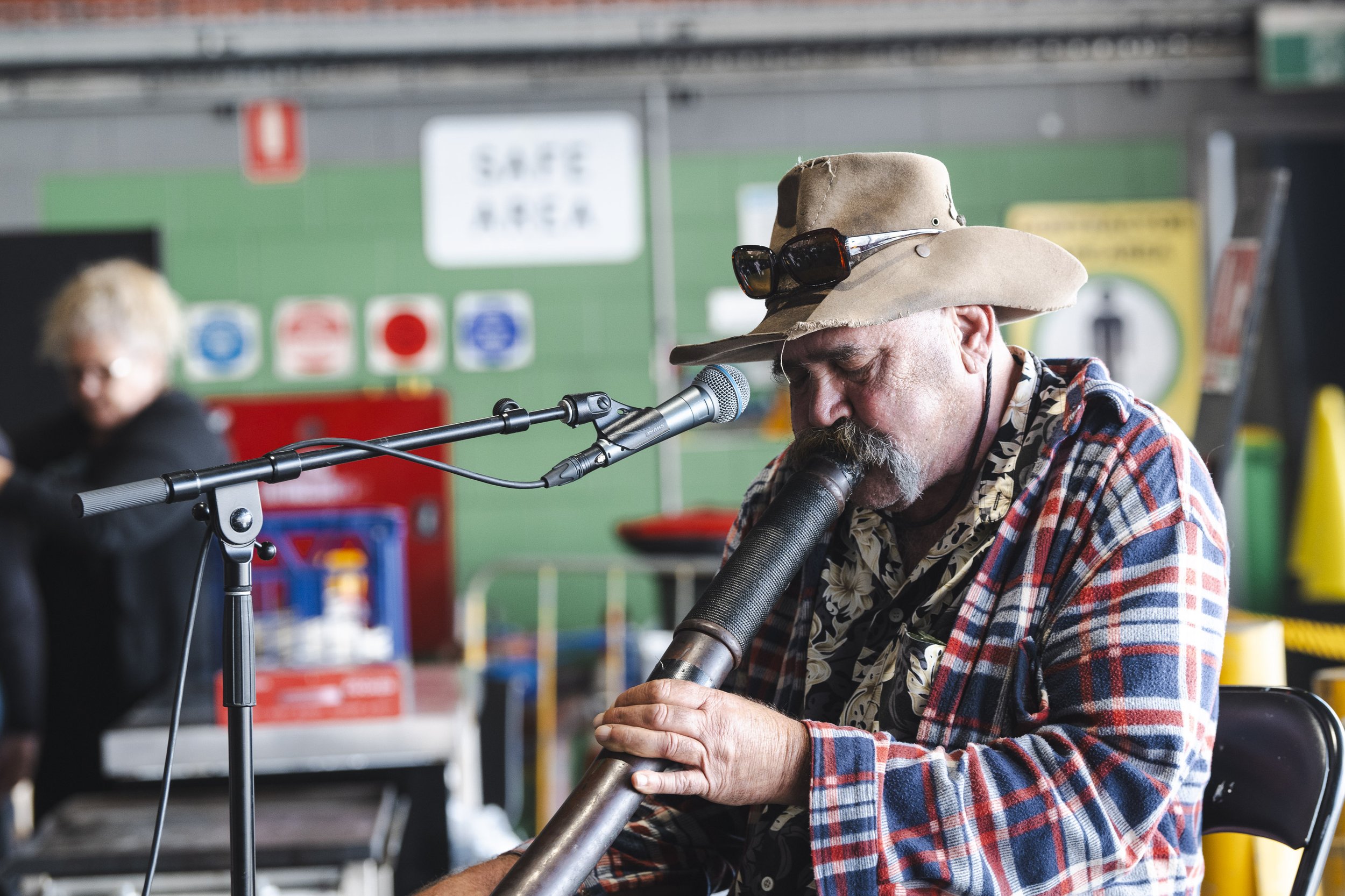
An older man wearing a large beige hat with sunglasses on top, playing a didgeridoo in an indoor setting with various signs and objects in the background.
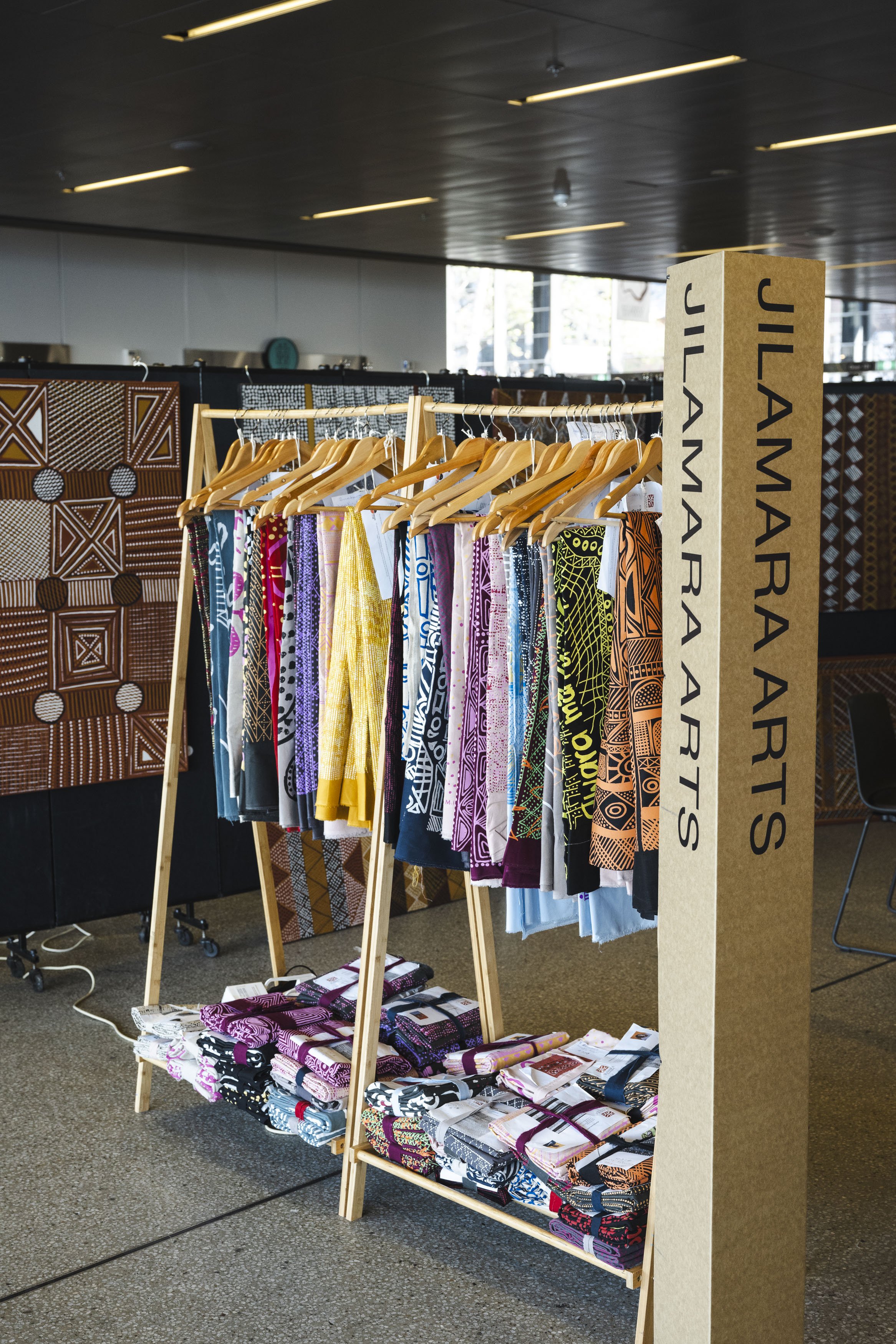
Jilamara Arts
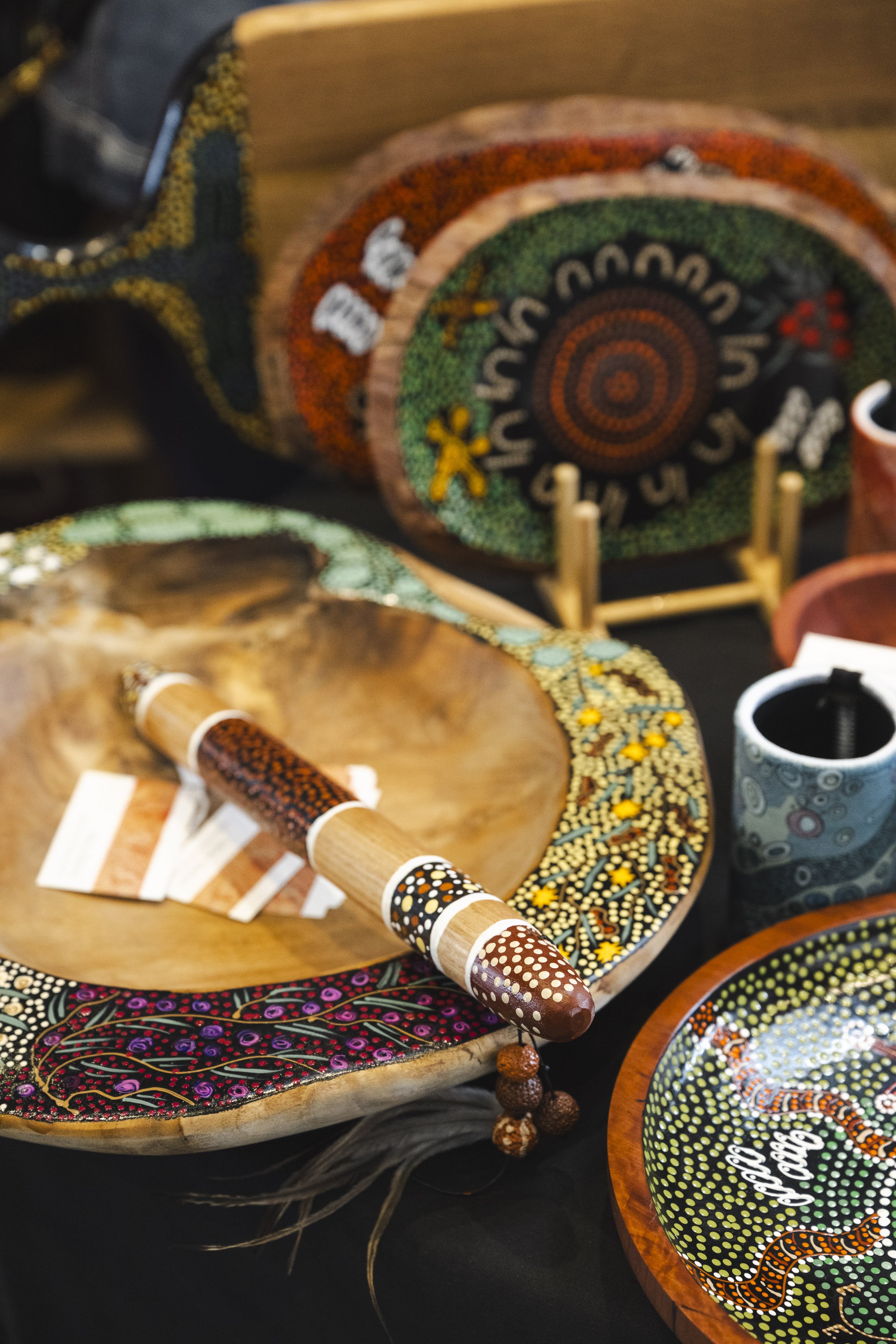
Display of Indigenous Australian art pieces, including hand-painted wooden boomerangs with intricate dot patterns and painted plaques with traditional motifs.
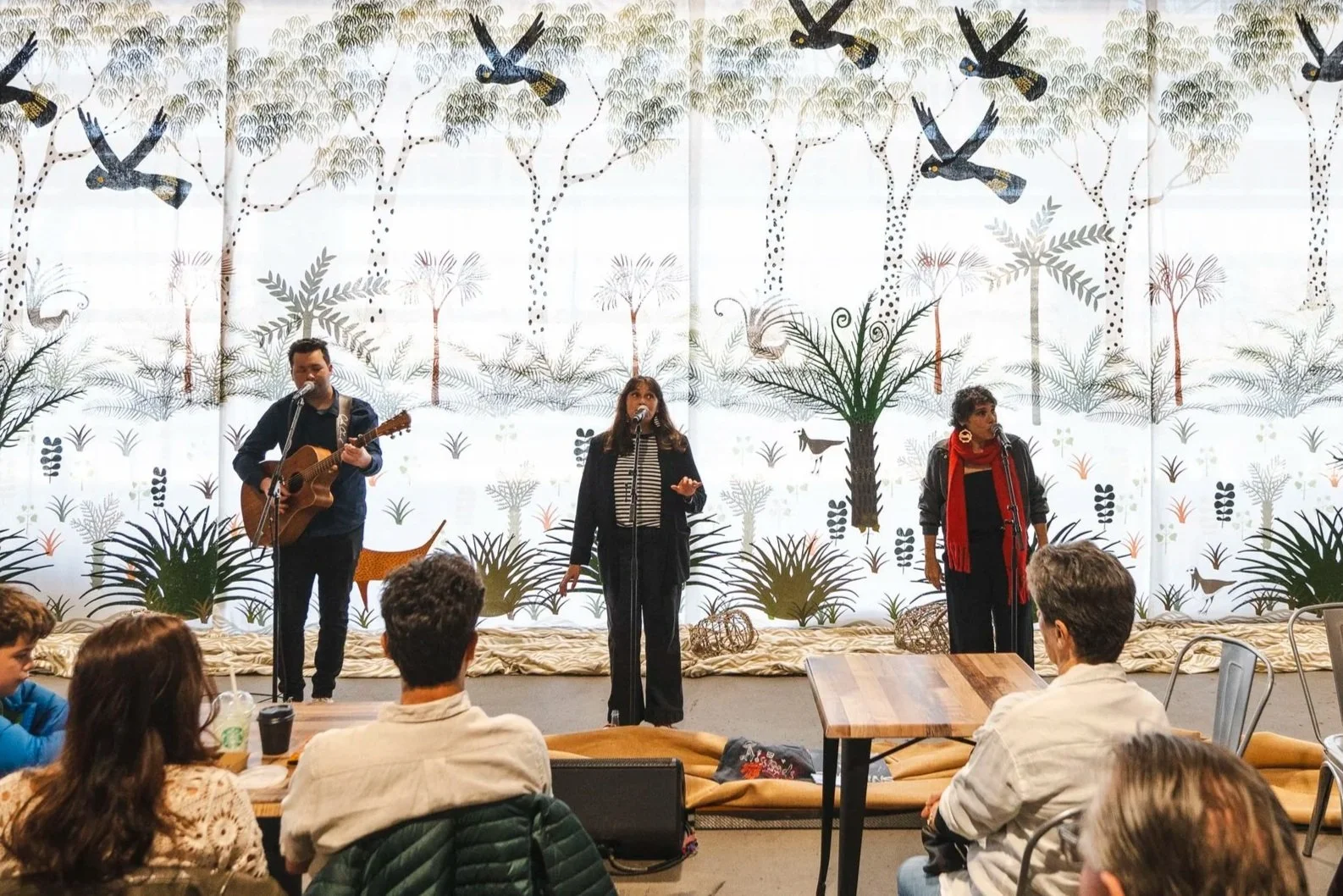
Singing Performance by Stiff Gins
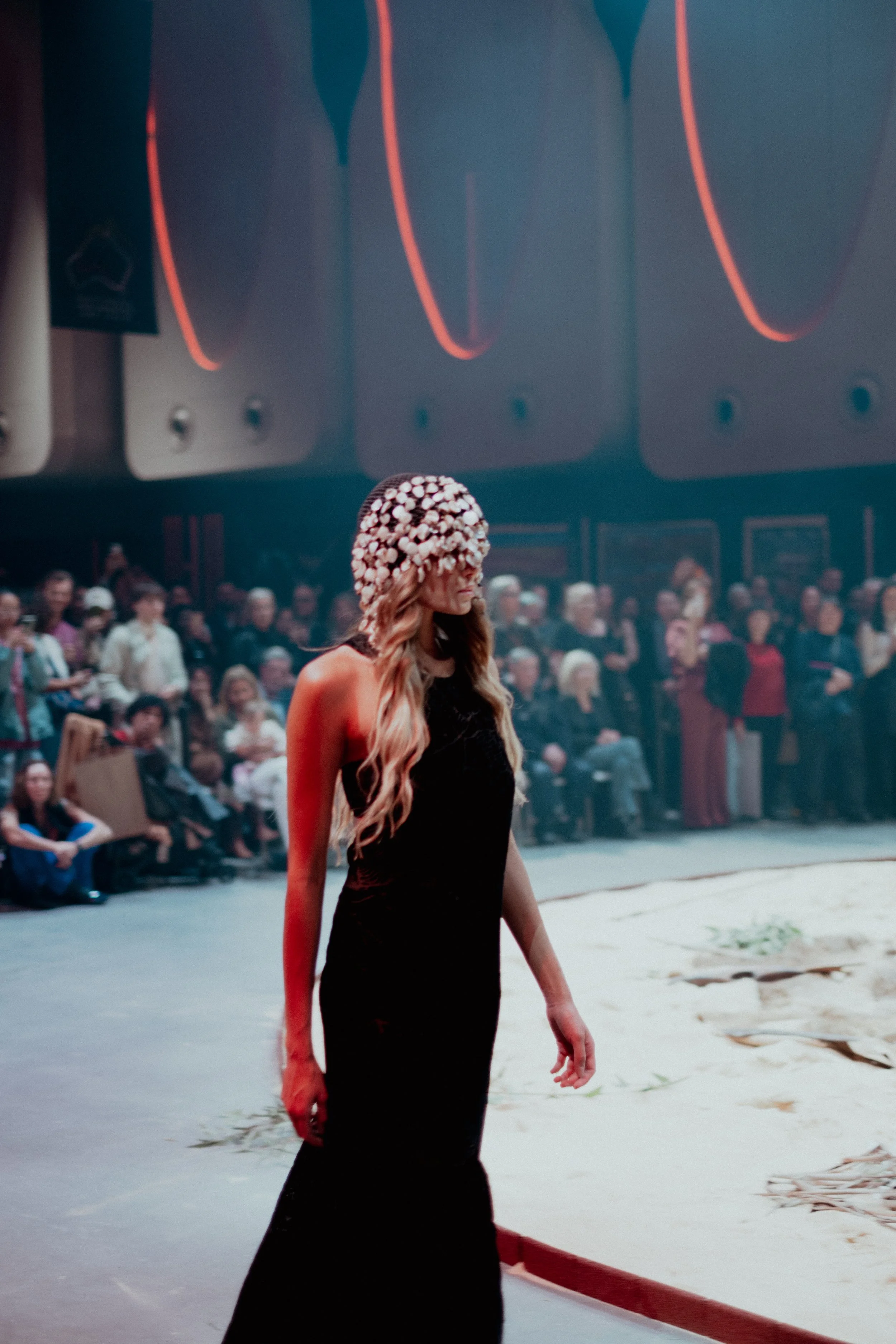
A woman with long blonde hair, wearing a black dress and a headpiece made of white flowers, walking on a runway during a fashion show with audience members seated in the background.
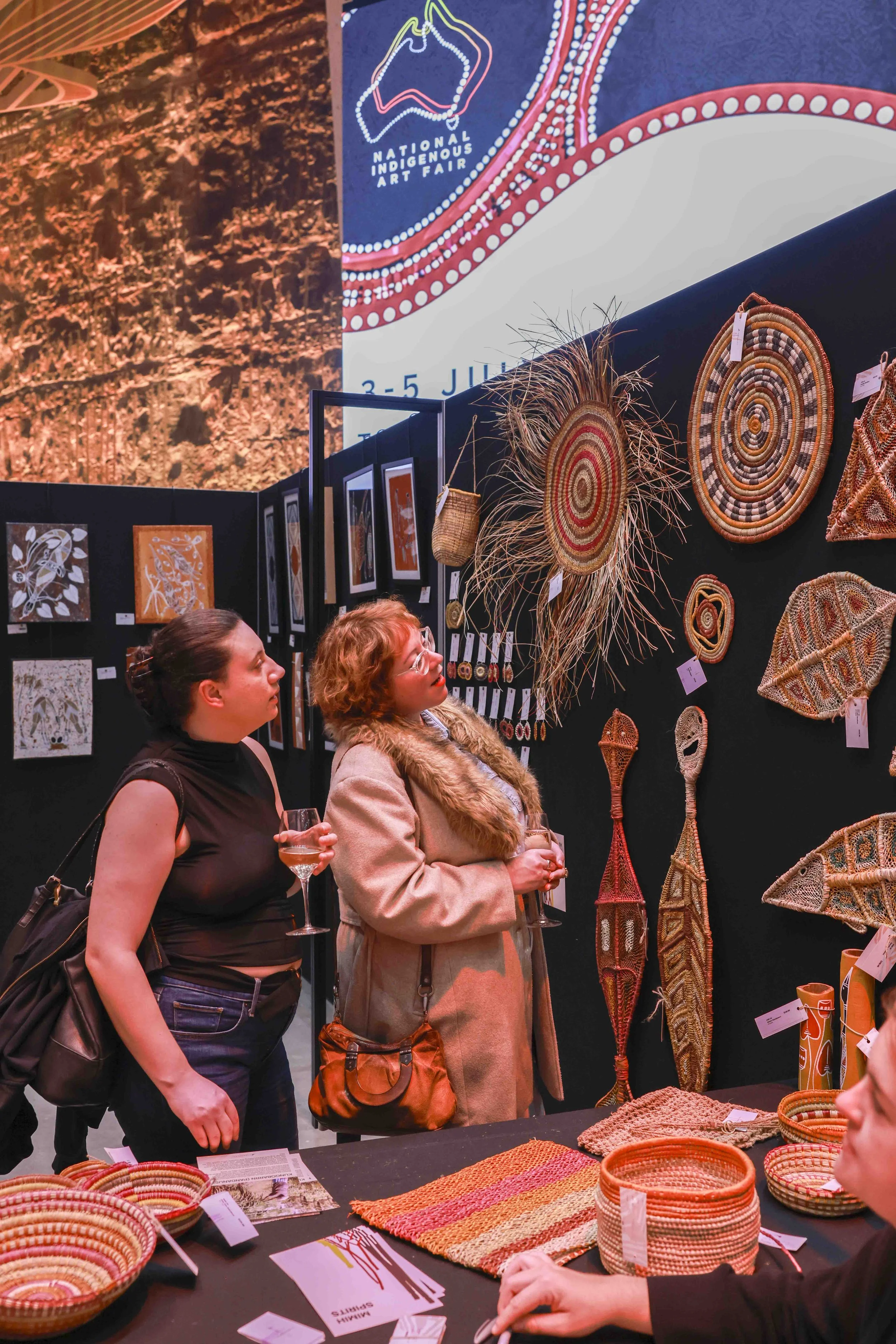
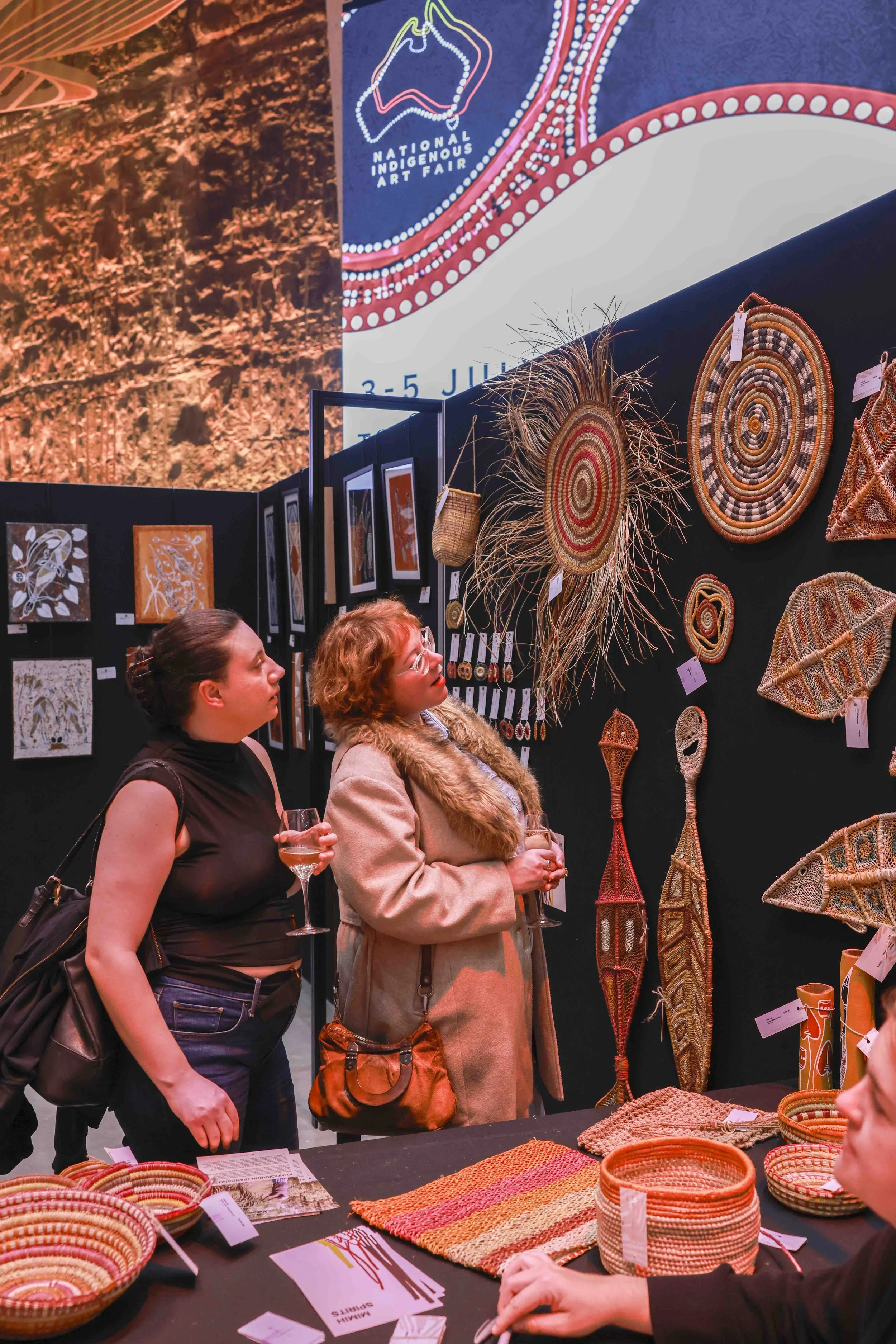
Two women are viewing traditional woven baskets and artworks at an art fair. The display includes colorful baskets, woven items, and artwork on the black wall behind them. A large sign for the National Indigenous Art Fair is visible in the background.
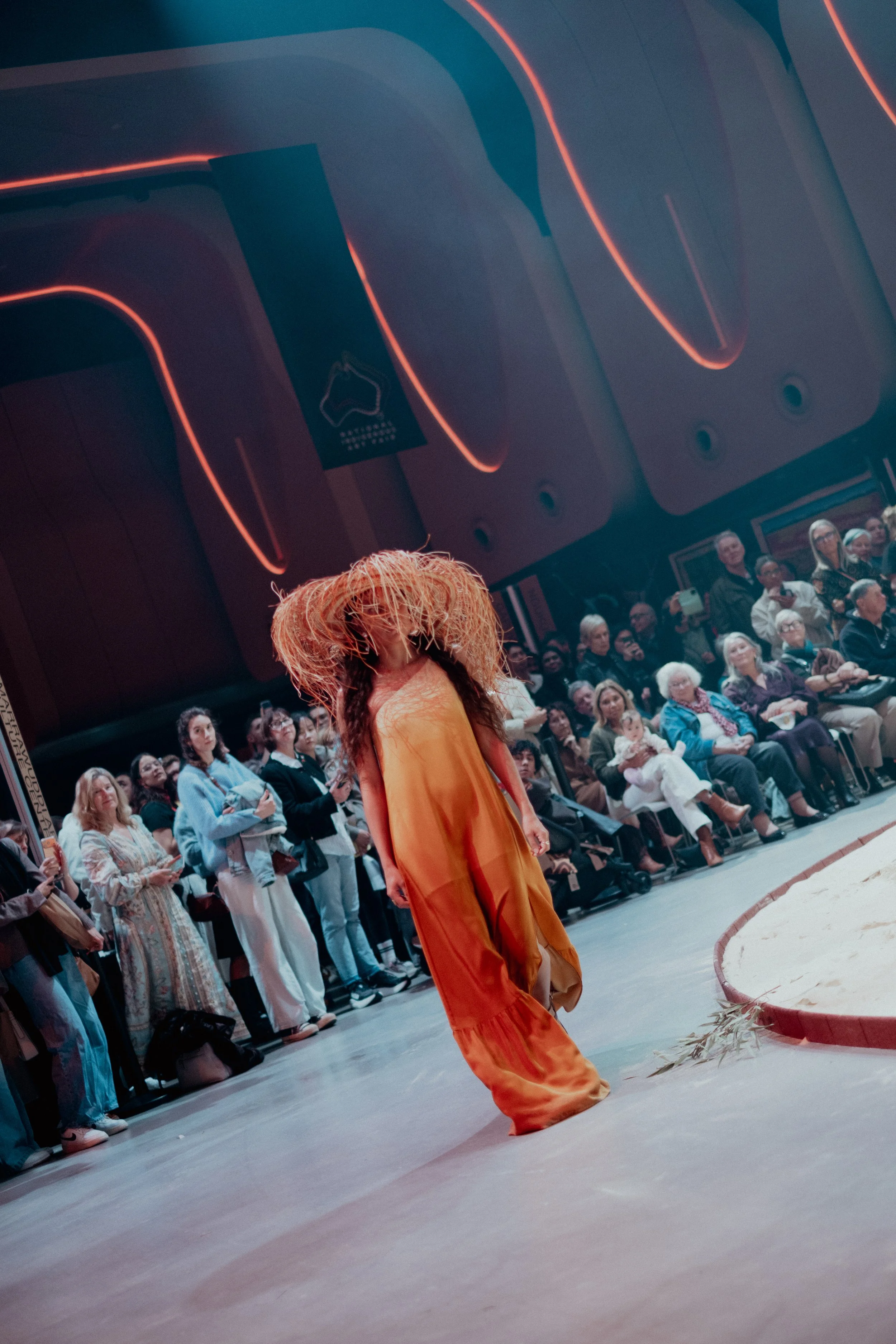
Person in an orange dress performing in front of an audience in an indoor arena with neon lighting.
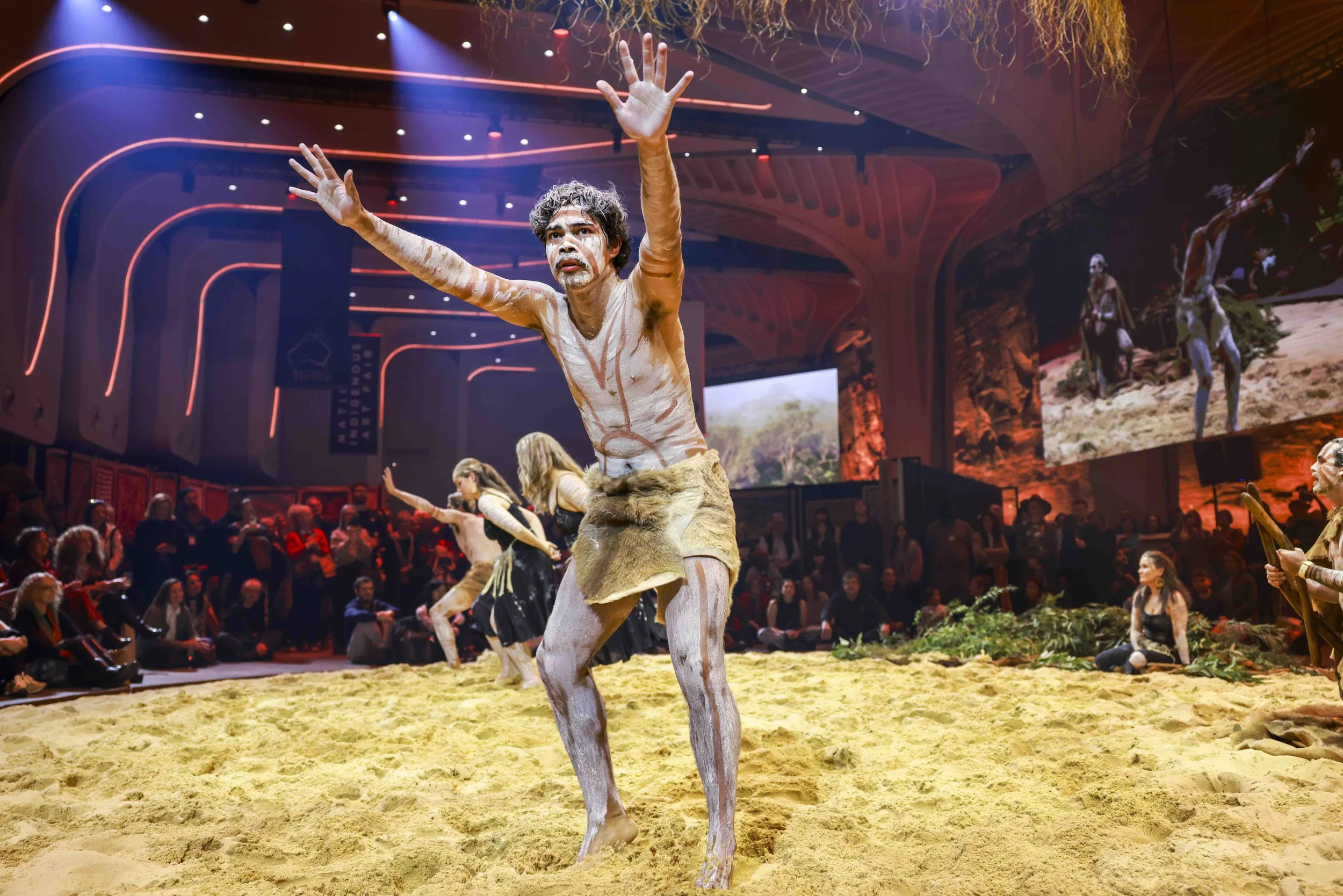
A performer dressed as a prehistoric man, covered in white paint with brown fur garments, dances in a sand-covered indoor arena during a cultural show. The audience watches attentively, and large screens display images related to the performance.
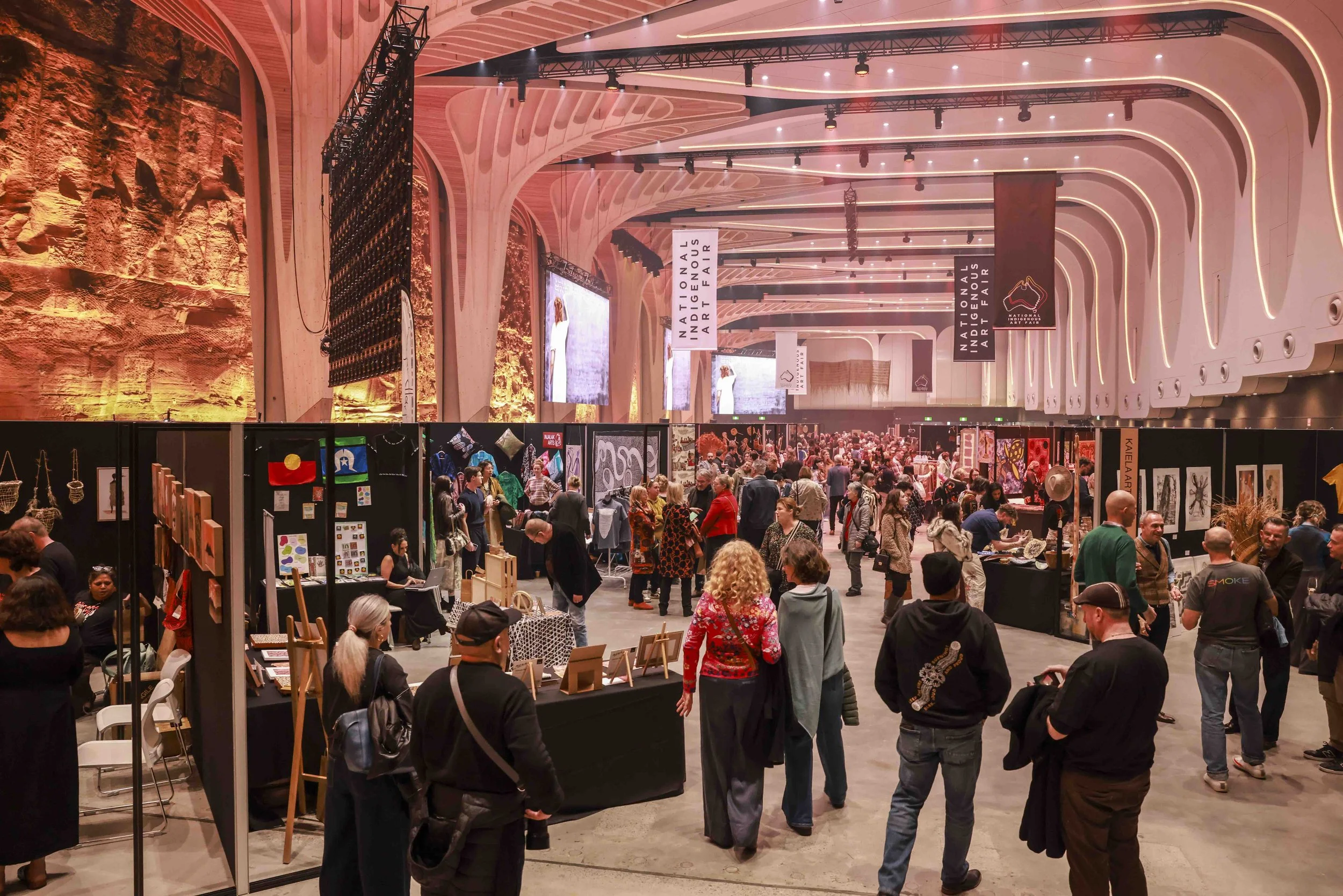
Crowd of people at the National Indigenous Arts Fair inside a modern, spacious building with curved architectural features, large screens, and banners.
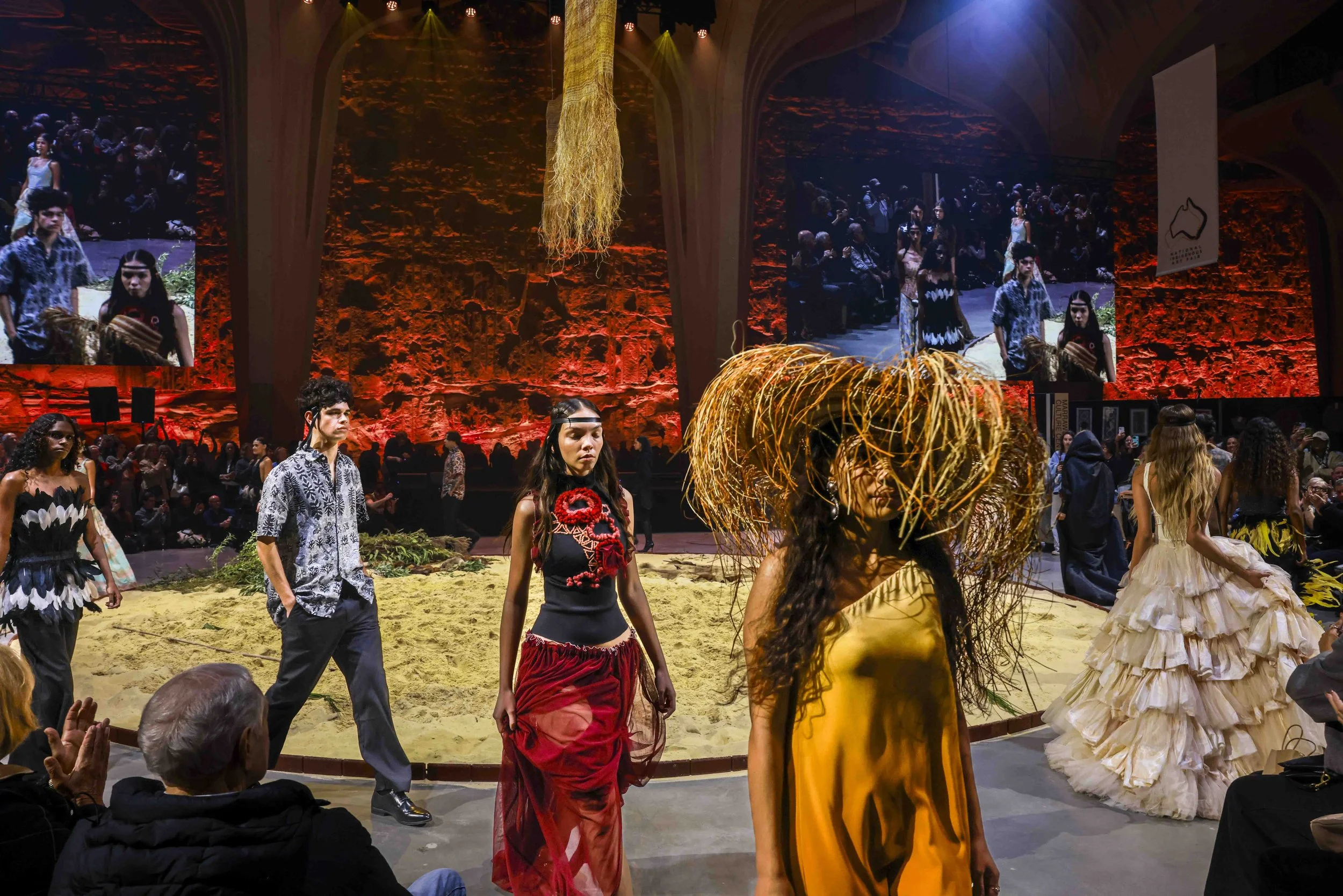
Models walk on a sandy runway during a fashion show, wearing vibrant, earthy-toned garments. The background features large screens displaying images of people and a textured red-orange wall. The audience is seated around the runway, watching attentively.
Art centres attending
We opened our Marketplace up to remote art centres to support these as most Indigenous artworks are produced in around 90 art centres located in very remote regions of Australia. These centres represent a viable pathway to address the extreme economic exclusion experienced by residents of Australia’s remote Indigenous communities.